Things to Do in Tenerife: Teide, the North and the Coast
Things to do in Tenerife, Canary Islands, sorted by interest: Teide, the north, the southern resorts, whales, beaches, towns, family days and bad-weather plans.
By Canary Islands 365 Editorial Reviewed by Alex Borshch, Founder & Editor
Published November 16, 2026 · 10 min read
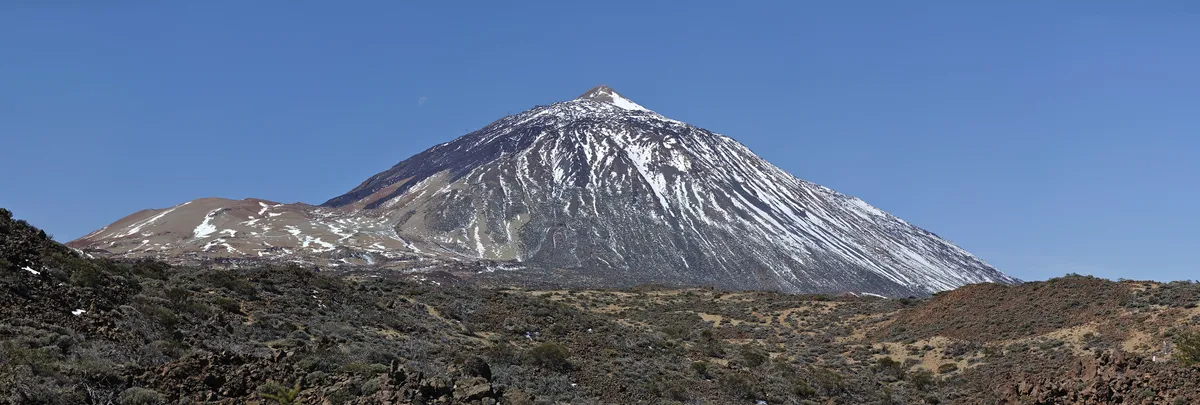
Tenerife, the largest of the Canary Islands, is two islands in one. The south is dry, sunny and built around resorts; the north is green, cooler and full of old towns and banana terraces. Between them rises Teide, Spain's highest peak, inside a national park you can drive across in an afternoon. This guide groups the best things to do on Tenerife by interest, so you can build days around what you enjoy rather than a checklist. Distances are short enough that most of it works as day trips from any base; our where to stay in Tenerife guide helps you pick one.
Teide and the national park
Teide National Park was declared a UNESCO World Heritage Site in 2007, and it is the reason many people choose Tenerife over its neighbours. The road climbs through pine forest into a wide volcanic crater floor of lava flows, pumice and strange rock towers, with the cone of Teide above. Go early: the light is better, the car parks are emptier and the high road is often above the cloud that sits over the coast.
- Ride the Teide cable car. As of November 2026 the operator says the cabins reach the top in under eight minutes, to an upper station at 3,555 metres, and that the usual stay up there is limited to one hour (up to two hours with a summit permit). It stops in strong wind or ice, so check on the day and have a plan B.
- Walk to the summit. The final trail to the crater rim needs a separate permit, booked through Tenerife ON. As of November 2026, the Cabildo lists a €15 fee for visitors resident outside the Canary Islands on the summit trail during the charged daytime hours (from 09:00; check the end time on Tenerife ON); children under 14 are exempt. Other high-mountain trails also require reservations, so check every trail in your route. Our Teide permit and cable car guide and the climbing Mount Teide page explain the options.
- Walk the crater floor. Shorter marked trails loop around the rock formations near the parador and the visitor centres. See hiking in the Canary Islands for more routes.
- Stay for the stars. The park's altitude and clean air make it a place to try stargazing. Dress for cold: nights up here are far colder than on the beach.
The green north
The north catches the cloud the trade winds bring, which is why it is green, terraced and often a few degrees cooler than the south. It is also where Tenerife feels most like a Canarian place rather than a holiday resort.
- Puerto de la Cruz and the Orotava Valley. The island's original resort town has a working harbour, a seafront promenade and old streets. Uphill, the town of La Orotava keeps grand balconied houses; it is famous for the flower and sand carpets of Corpus Christi.
- Anaga Rural Park. A ridge of jagged peaks and laurel forest at the island's northeast tip, with walking trails, tiny hamlets and the black-sand beach of Playa de Benijo at the end of the road.
- The Drago Milenario in Icod de los Vinos. A huge, ancient dragon tree, one of the island's symbols, in a small town worth a stroll.
- Masca and the Teno massif. A hamlet clinging to a ravine in the far northwest, reached by one of the island's most dramatic roads. Walking down the Masca ravine is regulated by the island council: the trail must be booked in advance, a boat transfer out from the bottom is compulsory, and, as of November 2026, independent trail visitors must use TITSA route 355 from Santiago del Teide to reach the start. The path can close for safety work or weather, so check the official booking site before you plan around it.
The south coast resorts
The southern resorts cluster around Costa Adeje, Playa de las Américas and Los Cristianos. The resorts run into one another along a long seafront promenade, which makes an easy walk or cycle between beaches, cafés and harbours.
- Swim at the resort beaches. Playa del Duque in Costa Adeje has pale sand and a seafront promenade. Check the flags before swimming.
- See the Los Gigantes cliffs. Sheer walls of rock drop straight into the sea on the west coast. They can be seen from the sea; check the route before booking a boat trip.
- Get on or under the water. The calm southwest coast suits snorkelling and scuba diving; Playa de las Américas has reef breaks for surfing.
- Play a round. Several courses sit in the south; see golf in the Canary Islands.
- Take the ferry to La Gomera. From the port at Los Cristianos, Fred. Olsen lists a 50-minute crossing to San Sebastián de La Gomera as of November 2026, making a day among the forests of Garajonay realistic. The island-hopping guide covers the details.
Whales and dolphins
The stretch of sea between southwest Tenerife and La Gomera was the first place in Europe to be named a Whale Heritage Site, a certification for responsible watching. The island's tourism board lists short-finned pilot whales and bottlenose dolphins as residents, so sightings are likely all year, while other species pass through seasonally. Trips leave from the harbours of Los Cristianos, Costa Adeje and Los Gigantes. Choose a boat with official authorisation for whale watching, expect the skipper to keep a respectful distance, and read our whale and dolphin watching page before you book.
Beaches
Tenerife's natural beaches are mostly dark volcanic sand, with a few golden ones. Pick by mood and by wind.
- Playa de las Teresitas. A long golden beach near San Andrés, just north of Santa Cruz, protected by a breakwater and popular with local families at weekends.
- El Médano. A natural sandy bay in the southeast, near the airport. The steady wind makes it a centre for windsurfing and kitesurfing; sunbathers may find it breezy.
- Playa Jardín. A black-sand beach in Puerto de la Cruz with gardens behind it. The Atlantic swell on the north coast can be strong, so watch the flags.
- Playa de Benijo. Wild and beautiful in Anaga, better for a walk and a sunset than a swim when the sea is up.
For the full ranking across all the islands, see the best beaches in the Canary Islands.
Towns and culture
- San Cristóbal de La Laguna. The old town has been a UNESCO World Heritage Site since 1999, and its grid of streets served as a model for colonial cities in the Americas. It is a university town, so it is lively in term time, and largely pedestrian.
- Santa Cruz de Tenerife. The capital has the white, wave-shaped Auditorio de Tenerife on its waterfront, parks, markets and a tram up to La Laguna. Before Lent the streets fill for the island's biggest party, the Santa Cruz de Tenerife Carnival.
- Eat Canarian food. Order papas arrugadas with red and green mojo, try conejo en salmorejo in a country restaurant in the north, and finish with a barraquito, a layered coffee served in local cafés. Wine lovers can add wine tasting in the north's vineyards.
- Time it with a festival. The Three Kings parades on 5 January and Canary Islands Day on 30 May bring the towns out. Check events for the year.
Tenerife with children
- Siam Park. The big water park in Costa Adeje is a full day out; buy tickets ahead in busy periods.
- Loro Parque. The large animal park in Puerto de la Cruz, an easy pairing with an afternoon on the north coast.
- A whale-watching trip. Short trips suit younger children; pick calm-sea mornings.
- Calm beaches. Consider Playa del Duque and the beaches of Los Cristianos, checking the flags and conditions before paddling.
- Teide. As of November 2026, children under three are not allowed on the cable car. The operator also excludes pregnant women and people with heart problems. Remember the thin air and cold at the top, and check for weather closures.
The seven-day Tenerife itinerary shows how to mix these with quieter days.
Rainy or windy days
Bad weather on Tenerife is usually local. Cloud and drizzle in the north often mean sun in the south, and the reverse happens when weather comes from the south. Check our weather page, then:
- Drive to the other side of the island. Check the route, traffic and weather before setting off between north and south.
- Go indoors in the cities. Santa Cruz has museums and the Auditorio; La Laguna's churches, cafés and covered market fill a wet morning.
- Visit Loro Parque. Check the forecast and take waterproofs for the outdoor areas.
- Climb above the cloud. When the coast is grey, Teide is often in sunshine. On windy days the cable car may not run; check road and park closure notices before driving up.
- Use the wind. A blustery day at El Médano is perfect for watching, or joining, the kitesurfers.
Getting around
A hire car gives the most freedom, especially for Teide, Masca and Anaga. Without one, TITSA buses link the main towns and resorts, and the tram runs between Santa Cruz and La Laguna. For the southern resorts, check flights to Tenerife South, close to the resorts; Tenerife North is next to La Laguna. Read getting around and local tips before you go.
Frequently Asked Questions
What is the number one thing to do in Tenerife?
For most visitors it is Teide National Park, a UNESCO World Heritage Site since 2007. Drive up through the pine forest to the crater floor, ride the cable car if the wind allows, and come back after dark for the stars.
Do I need a permit to climb Mount Teide?
A return cable car ride requires a ticket and compliance with the operator's health restrictions. The short final trail from the upper station to the summit crater needs a separate permit through Tenerife ON. As of November 2026, the Cabildo lists a €15 summit-trail fee for visitors resident outside the Canary Islands in the charged daytime hours from 09:00, with children under 14 exempt. An ascent-only cable car ticket also requires the permits for your descent route. Book ahead. Our Teide permit and cable car guide explains how.
Can you see whales all year in Tenerife?
Yes. Tenerife's tourism board lists short-finned pilot whales and bottlenose dolphins as residents of the waters off the southwest coast, so sightings are likely in any month. Other species are seasonal. Trips leave from Los Cristianos, Costa Adeje and Los Gigantes.
Is the north or the south of Tenerife better for things to do?
They complement each other. The south has the sunniest beaches, the water parks and most boat trips. The north has La Laguna, La Orotava, Puerto de la Cruz, Anaga and Loro Parque. Staying in one and day-tripping to the other is the usual approach.
What can I do in Tenerife when it rains?
Drive to the other side of the island, where the weather is often different, or head up to Teide, which is frequently above the cloud. In the cities, Santa Cruz's museums and the Auditorio and La Laguna's old town work well on a wet day, as does Loro Parque.
Can I visit La Gomera as a day trip from Tenerife?
Yes. Ferries leave from Los Cristianos, and Fred. Olsen lists the crossing to San Sebastián de La Gomera at 50 minutes as of November 2026. A day is enough for Garajonay's forest and a viewpoint or two; staying a night or two is more relaxed.
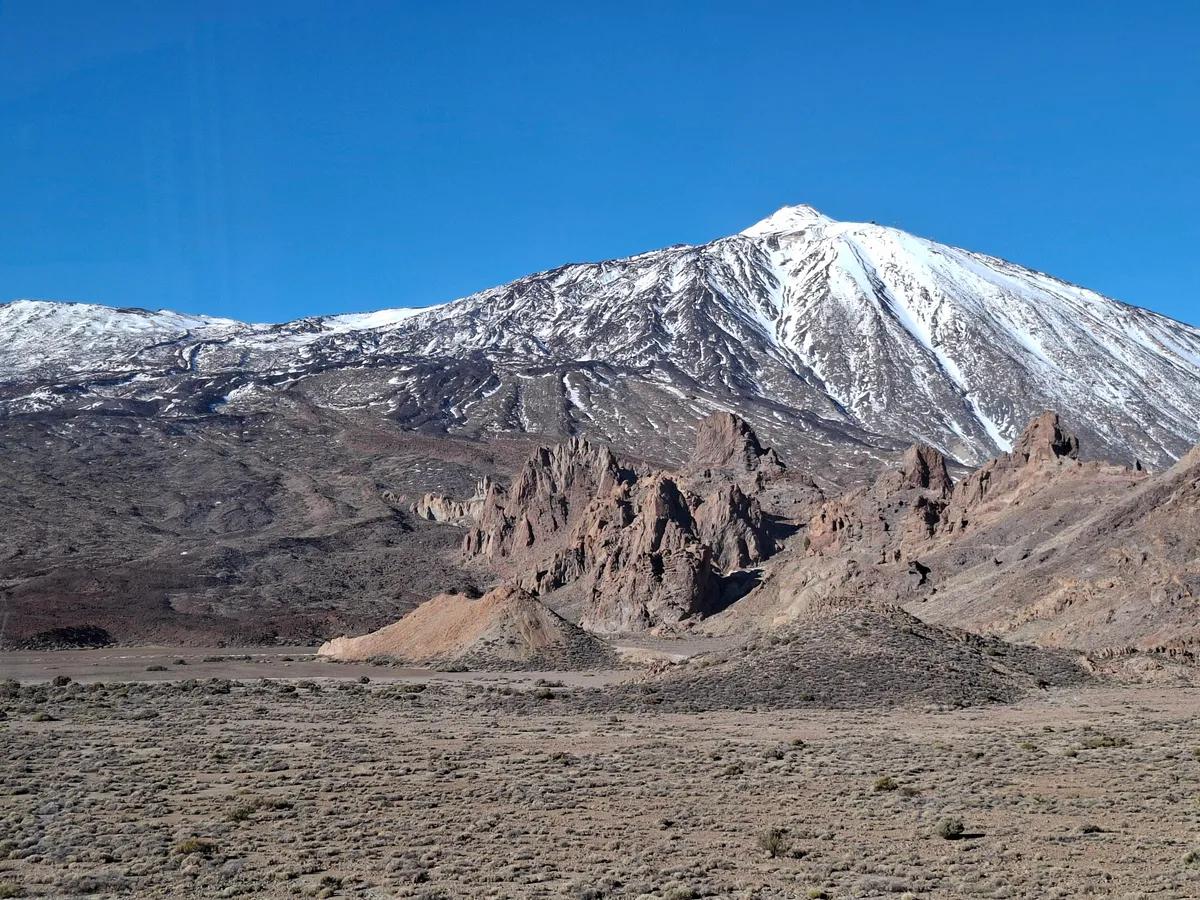
Tenerife
This guide covers Tenerife. Explore more about this destination.
View Destination
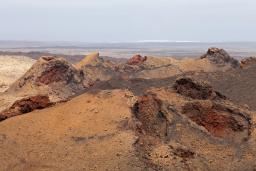
Photo gallery
Snow-streaked Mount Teide rising above scrubland in Teide National Park, Tenerife
Photo: Quartl via Wikimedia Commons · CC BY-SA 3.0 (https://creativecommons.org/licenses/by-sa/3.0)