Things to Do in Lanzarote: A Guide by Interest
Things to do in Lanzarote centre on Timanfaya's 1730 to 1736 lava fields, César Manrique sites, Papagayo's coves and the short ferry from Órzola to La Graciosa.
By Canary Islands 365 Editorial Reviewed by Alex Borshch, Founder & Editor
Published November 16, 2026 · 9 min read
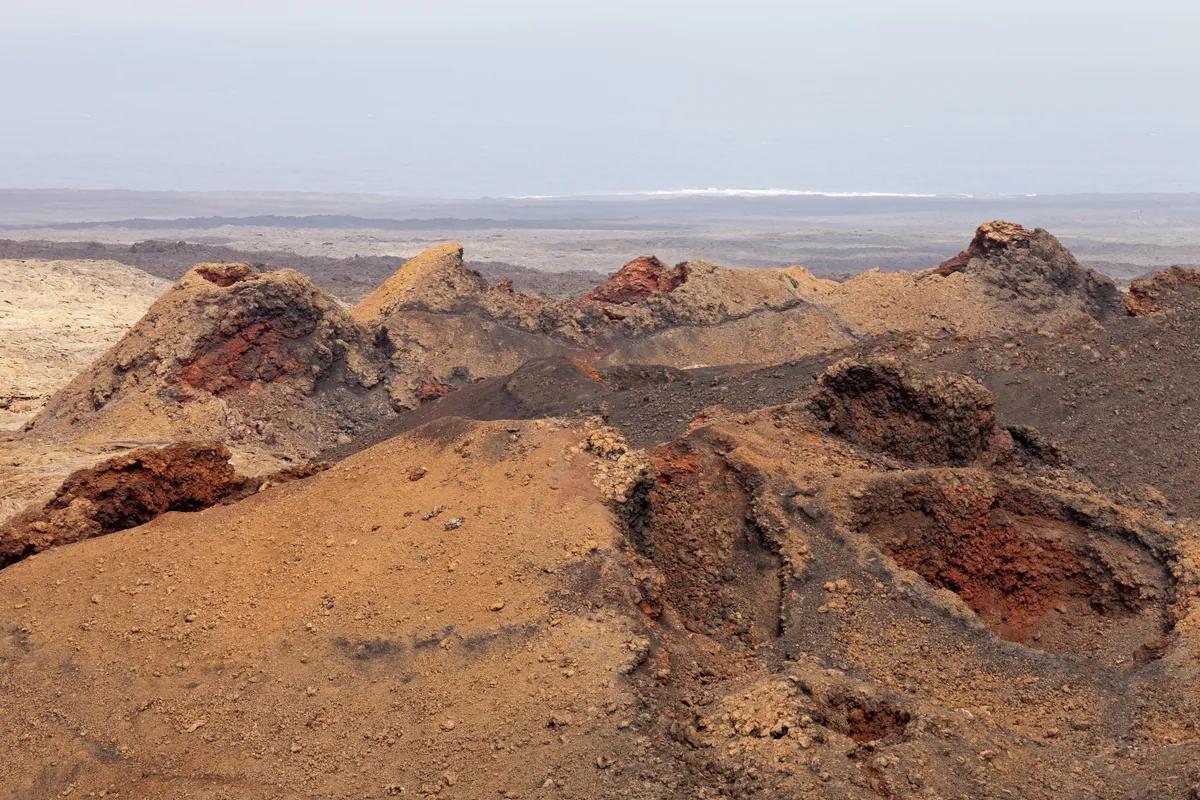
Lanzarote is the north-eastern island of the Canary Islands, in the province of Las Palmas, with extensive volcanic landscapes. Black lava fields, red cones and white villages make it look like nowhere else in the archipelago, and the artist César Manrique turned several of its caves, cliffs and quarries into places you can visit. UNESCO declared the whole island a Biosphere Reserve, towns included. You will land at Lanzarote Airport (ACE) near Arrecife; most visitors stay in Puerto del Carmen or Playa Blanca. The Lanzarote island guide covers the basics; this guide is arranged by interest.
Landscapes and parks
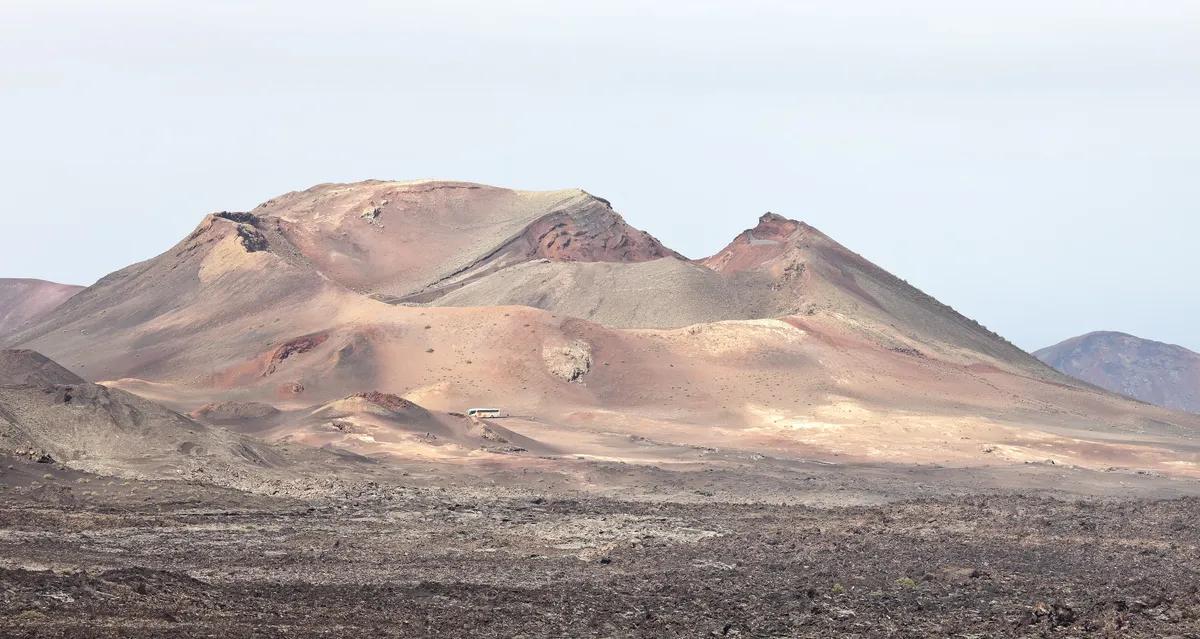
Timanfaya National Park protects more than 5,100 hectares of lava left by six years of eruptions between 1730 and 1736. You cannot roam freely across its core. The standard visit is the Montañas del Fuego (Fire Mountains) centre on the Islote de Hilario, where a coach takes you along the Ruta de los Volcanes, a road of about 14 kilometres that Manrique laid out through the craters. As of November 2026 the ticket costs €30 (children up to 6 free), the centre opens 09:00 to 15:45 every day, and tickets are sold online only, for a fixed date and time. The ticket includes the 35-minute coach route and the geothermal demonstrations, where staff show how hot the ground still is a few metres down. The El Diablo restaurant grills food over a well of volcanic heat; it takes no reservations.
East of the park, La Geria is the island's wine country: vines planted in hollows dug through the volcanic ash, each sheltered by a curved stone wall. It is a striking drive, and several bodegas along the road offer wine tasting. On the west coast near El Golfo, the green lagoon (Charco de los Clicos) sits inside a half-eroded crater beside a black beach; you look at it from the path above rather than swim in it.
For the island's volcanic tubes and craters as a whole, see volcano and lava tube visits.
The César Manrique sites
Manrique's work is the main reason Lanzarote feels different from its neighbours. The island's art, culture and tourism centres (CACT) run several sites associated with his work, while Cueva de los Verdes was adapted by Jesús Soto. Manrique's foundation runs his former home. Prices and hours below are as of November 2026.
- Jameos del Agua: the first centre Manrique created, inside a collapsed section of a lava tube from the La Corona volcano, with a saltwater lake and an underground auditorium. From €17, 10:00 to 18:00.
- Cueva de los Verdes: a guided walk of about one kilometre through levels of the same lava tube, in Spanish and English. €17, 09:30 to 16:45, booked online for a set time.
- Mirador del Río: a viewpoint built into the top of the northern cliffs, with windows facing La Graciosa across the strait. €9, 10:00 to 17:00, last entry 16:40.
- Jardín de Cactus: a garden in a former quarry at Guatiza, with terraces of cacti from five continents. €9, 10:00 to 17:00.
- Fundación César Manrique: Manrique's former home at Tahíche, built into a lava flow, now a gallery. €10 standard, 10:00 to 17:30, ticket desk closes 17:00. His house museum in Haría is also open, at the same price, from 10:30 to 17:30, with its ticket desk closing at 17:00. Both museums close on 1 January.
Children aged 0 to 6 enter the CACT centres free. Book the two timed sites (Montañas del Fuego and Cueva de los Verdes) first and build the rest of the day around them.
Beaches
In the far south, the Playas de Papagayo are a string of sandy coves below low cliffs, reached by a dirt track through the protected Los Ajaches area. They are close to Playa Blanca and offer sheltered swimming in calm conditions. As of November 2026, the Ayuntamiento de Yaiza lists a €3 entrance charge to Los Ajaches for non-residents of Lanzarote, payable by card only. In Puerto del Carmen, Playa Grande is the main resort beach, with a promenade behind it.
On the north-west coast, Playa de Famara is a long, wild beach under the Risco de Famara cliffs. It is superb for walking and surfing and dangerous for casual swimming: currents are strong and waves break hard. In the north-east, near Órzola, Caletón Blanco has white sand and shallow lagoons between black lava, which children love at low tide. For more, read the best beaches in the Canary Islands.
Towns and culture
Teguise, the old capital, has cobbled streets, churches and low whitewashed houses, and has a historic centre worth exploring. Haría, in the north, sits in a valley of palm trees and holds Manrique's house museum. Arrecife, the capital, is a working town with a lagoon in the middle, worth an hour if you are passing. At the table, look for papas arrugadas with mojo, fresh fish, goat's cheese and the local Malvasía wine from La Geria.
On the water
Famara is a base for surf lessons, and beginners use it on smaller days; start with surfing. Puerto del Carmen is the main base for scuba diving, and the sheltered coves of Papagayo suit snorkelling on calm days. Athletes may recognise the island from the Ironman Lanzarote, whose swim, hilly bike course and run show how windy and steep the island can be.
Walks
Lanzarote is not a mountain island, but it has rewarding hikes: crater rims in the volcanic zone outside the national park, the cliff paths above Famara, and the coast near Órzola. Inside Timanfaya, keep to what the park allows rather than heading out across the lava. The island is popular for road cycling too, though the wind makes every ride harder than its profile suggests. Bring sun protection: there is almost no shade outside the villages.
With children
The Jameos del Agua lake (look for the tiny blind crabs, an endemic species adapted to darkness), the coach ride through Timanfaya and the geothermal demonstrations hold children's attention well. The coves of Papagayo and the lagoons of Caletón Blanco are calmer than the open beaches. Cueva de los Verdes involves low ceilings and dim light, which some young children dislike. Playa Blanca's beaches and promenade are easy with a pushchair.
A windy or cloudy day
Lanzarote is windy much of the year, and some days are grey. That is when the indoor and sheltered sites come into their own: go underground at Cueva de los Verdes and Jameos del Agua, spend a morning at the Manrique foundation in Tahíche and his house in Haría, and finish with a tasting in La Geria. The Jardín de Cactus is walled and partly sheltered. Mirador del Río is best saved for a clear day, since cloud can hide the view of La Graciosa. Check Canary Islands weather first.
A day trip by ferry
La Graciosa, the small island facing the Mirador del Río, is the classic day out. As of November 2026, ferries leave the harbour at Órzola, in the far north, roughly every 30 minutes, and the crossing takes 25 to 30 minutes with Líneas Romero, one of the companies on the route. La Graciosa has no asphalt roads: the village of Caleta de Sebo has streets of sand, and you explore on foot or by bike, which you can hire in the village. Walk or cycle to Playa de las Conchas on the north coast for the view of the volcanic cones, but treat the sea there with respect: currents can be strong. Take water, as facilities are limited away from the villages.
From Playa Blanca, ferries cross the strait to Corralejo in the north of Fuerteventura; Fred. Olsen Express lists 25 or 35 minutes depending on the vessel, as of November 2026. A day there gives you the Corralejo dunes and the town's beaches. The island hopping page compares routes, and things to do in Fuerteventura covers the neighbouring island in depth.
What Lanzarote is not good for
Lanzarote is not green. If you want forests, high mountains and shady trails, La Palma, La Gomera or Tenerife suit you better. Its best sights are spread out and buses do not reach them all on a convenient schedule, so most visitors hire a car. The paid sites add up if you visit all of them, and the wind can make beach days uncomfortable on the exposed north and west coasts. Famara and La Graciosa's northern beaches are for looking at more than for swimming. If you are still choosing, read which Canary Island is best.
Frequently Asked Questions
How many days do you need in Lanzarote?
Four or five days covers Timanfaya, the Manrique sites, a beach day at Papagayo and a day on La Graciosa. Our Lanzarote 5-day itinerary puts them in a sensible order.
Do you need to book Timanfaya in advance?
Yes. As of November 2026 tickets for Montañas del Fuego, the visitor centre where the coach route through Timanfaya starts, are sold online only, for a specific date and time. The general ticket costs €30, and children up to 6 go free.
Which César Manrique site should you see if you only have time for one?
Jameos del Agua shows his idea best: a natural lava cave turned into a lake, garden and concert hall. If you prefer art and architecture to caves, choose the Fundación César Manrique, his former home built into the lava at Tahíche.
How do you get to La Graciosa?
By ferry from Órzola in the north of Lanzarote. As of November 2026, crossings take 25 to 30 minutes and leave roughly every half hour in the day. There are no tarmac roads on the island, so plan to walk or hire a bike in the village.
Can you swim at Playa de Famara?
Do not treat swimming ability as a guarantee of safety. Follow local flags and lifeguard instructions. Famara is exposed to Atlantic swell and has strong currents. Papagayo's coves in the south are more sheltered, but check conditions there too.
Choose two threads, perhaps volcanoes and Manrique or beaches and La Graciosa, and Lanzarote gives you a week of landscapes you will not find anywhere else in Europe.
Lanzarote
This guide covers Lanzarote. Explore more about this destination.
View Destination
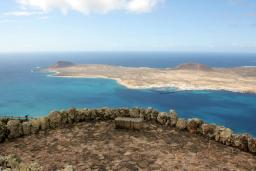
Photo gallery
Red and ochre volcanic cones in Timanfaya National Park, Lanzarote
Photo: Luis Miguel Bugallo Sánchez (Lmbuga) via Wikimedia Commons · CC BY-SA 3.0 (https://creativecommons.org/licenses/by-sa/3.0)