Lanzarote
Lanzarote is the volcanic island of Timanfaya's lava fields, La Geria's walled vines and César Manrique's art, with resort beaches in the south and La Graciosa a short ferry away.
Lanzarote
Lanzarote is the volcanic island of Timanfaya's lava fields, La Geria's walled vines and César Manrique's art, with resort beaches in the south and La Graciosa a short ferry away.
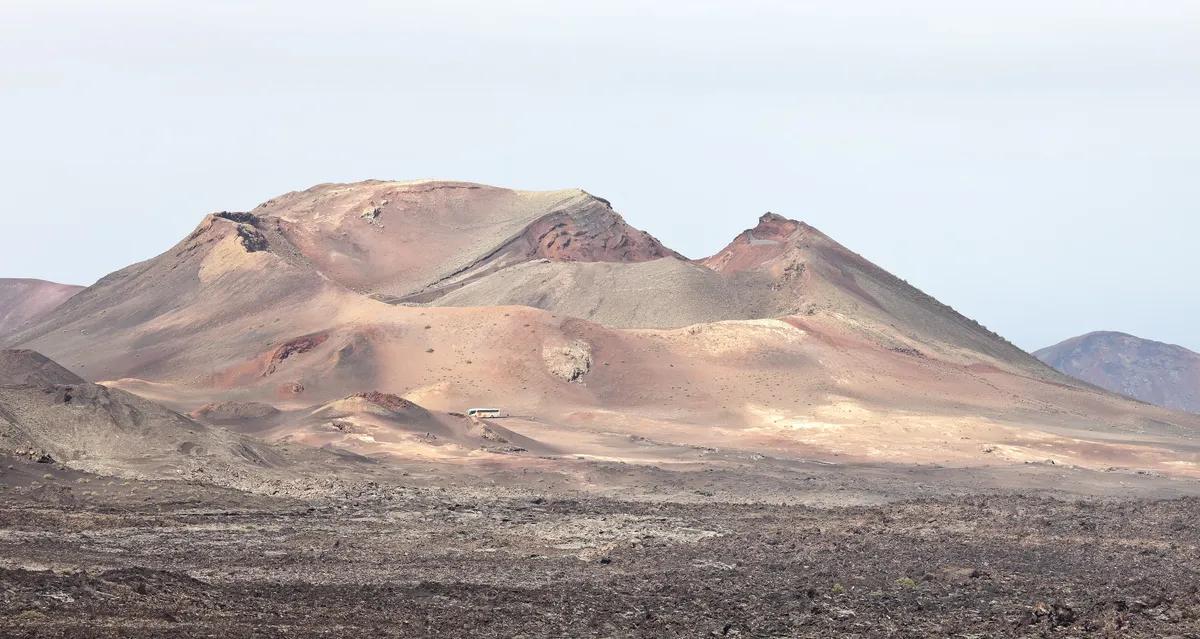
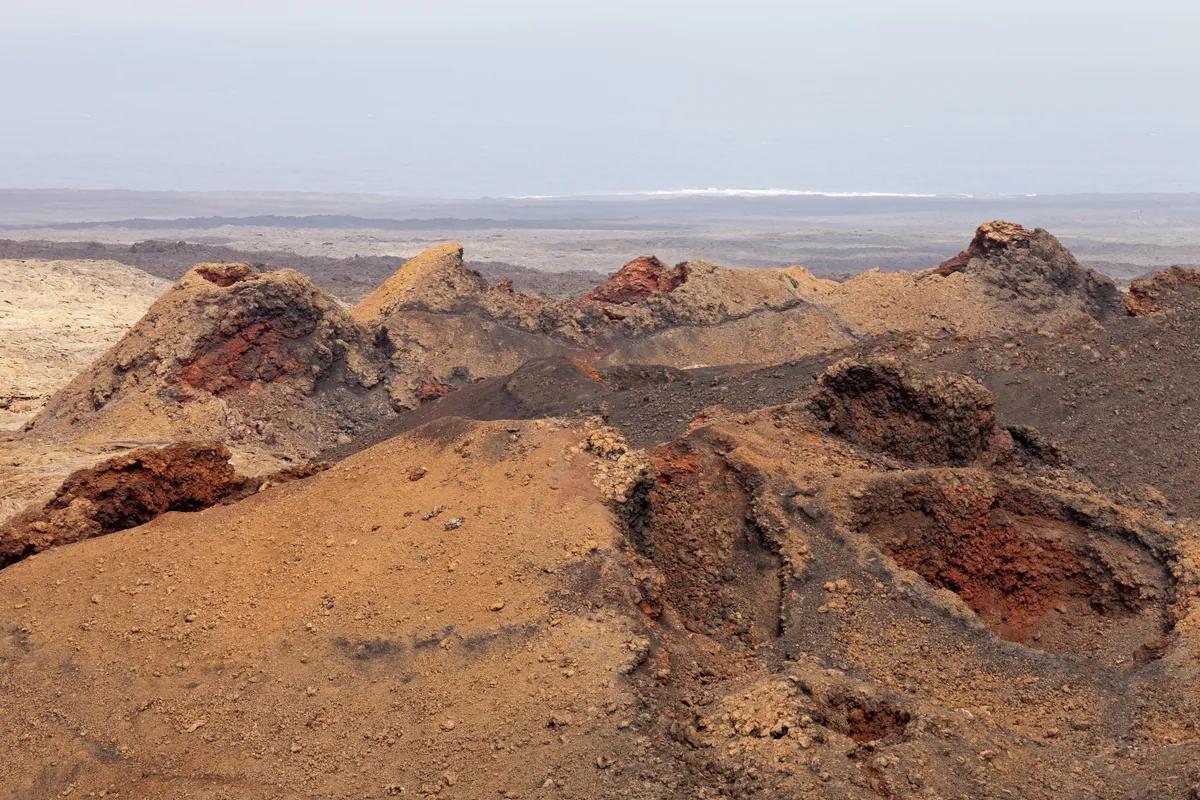
Lanzarote is the easternmost of the Canary Islands, a low, dry and strikingly volcanic island off the coast of Africa. Eruptions between 1730 and 1736 buried a large part of its south-west under lava, now protected as Timanfaya National Park. The whole island has been a UNESCO Biosphere Reserve since 1993. What sets Lanzarote apart is how it looks: low white houses, black lava and green doors and windows, a style the artist César Manrique championed and that still governs much of the island's building.
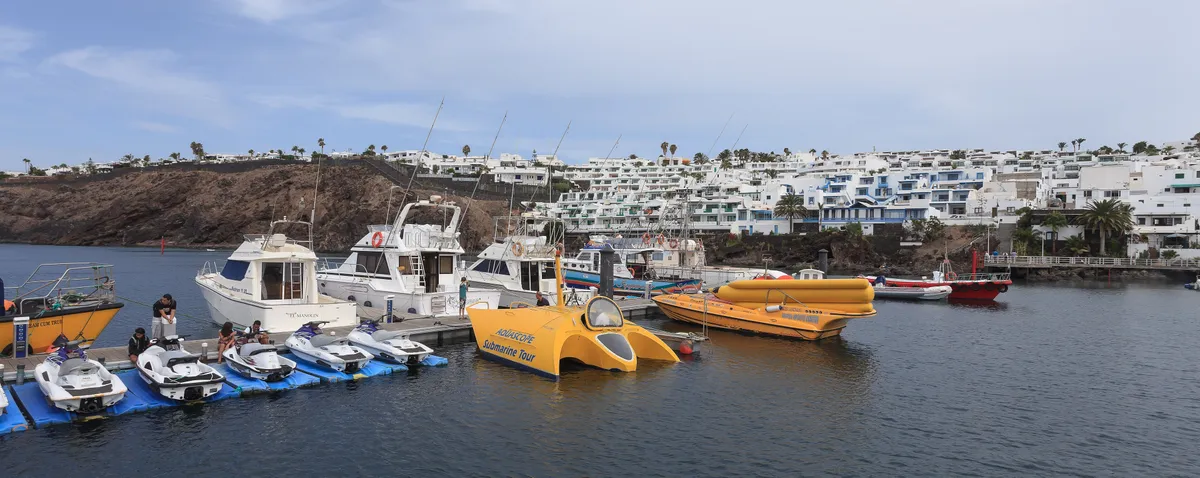
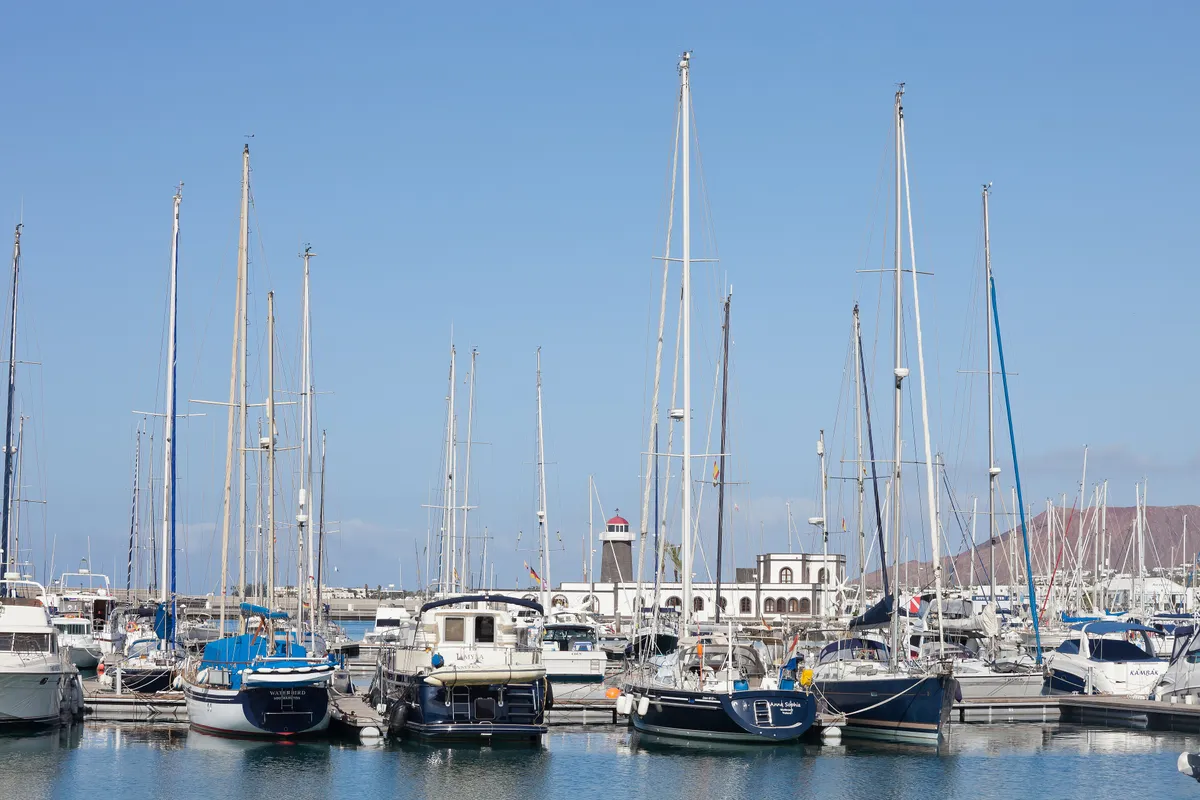
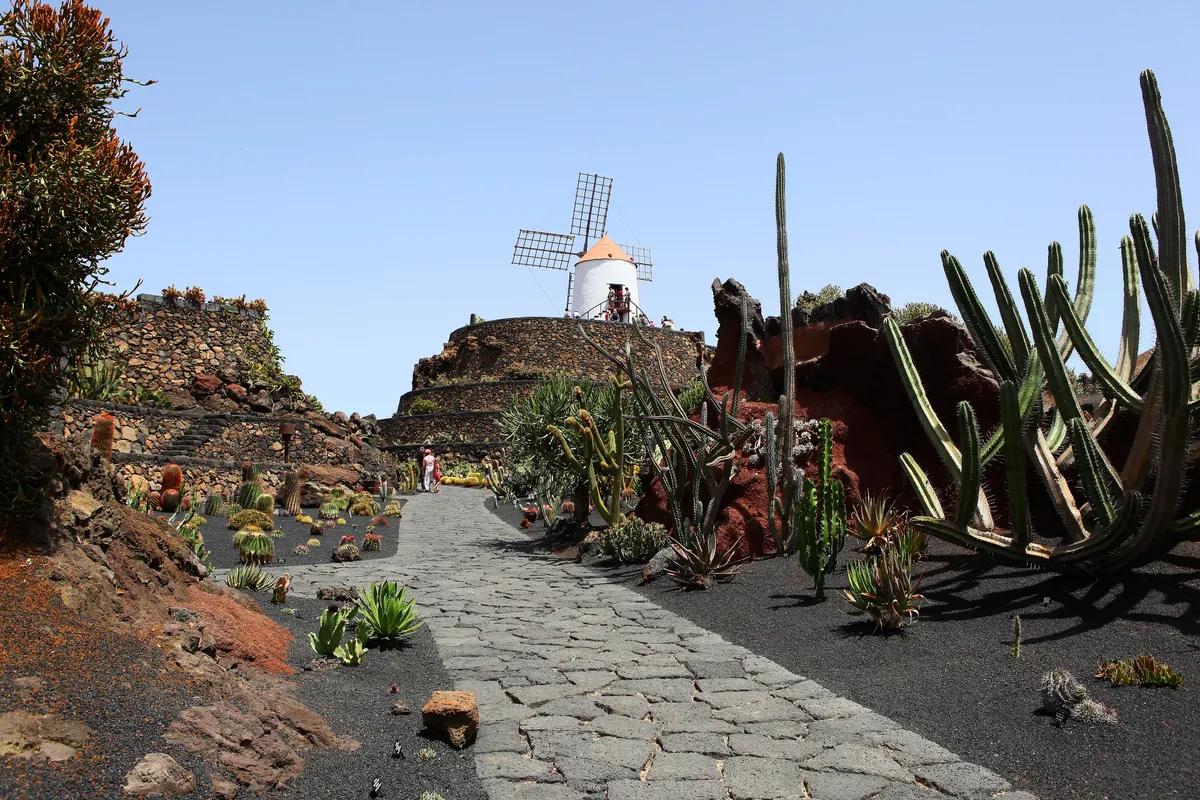
The island is compact and easy to drive. The resorts are on the south and east coast: Puerto del Carmen, a major resort, close to Lanzarote Airport (ACE), and Playa Blanca at the southern tip, near the Papagayo beaches. The capital, Arrecife, sits between the airport and the north. The north holds most of the Manrique sites: Jameos del Agua, the Cueva de los Verdes, the Mirador del Río and the Jardín de Cactus. The west coast has the surf beach of Famara and the green lagoon at El Golfo.
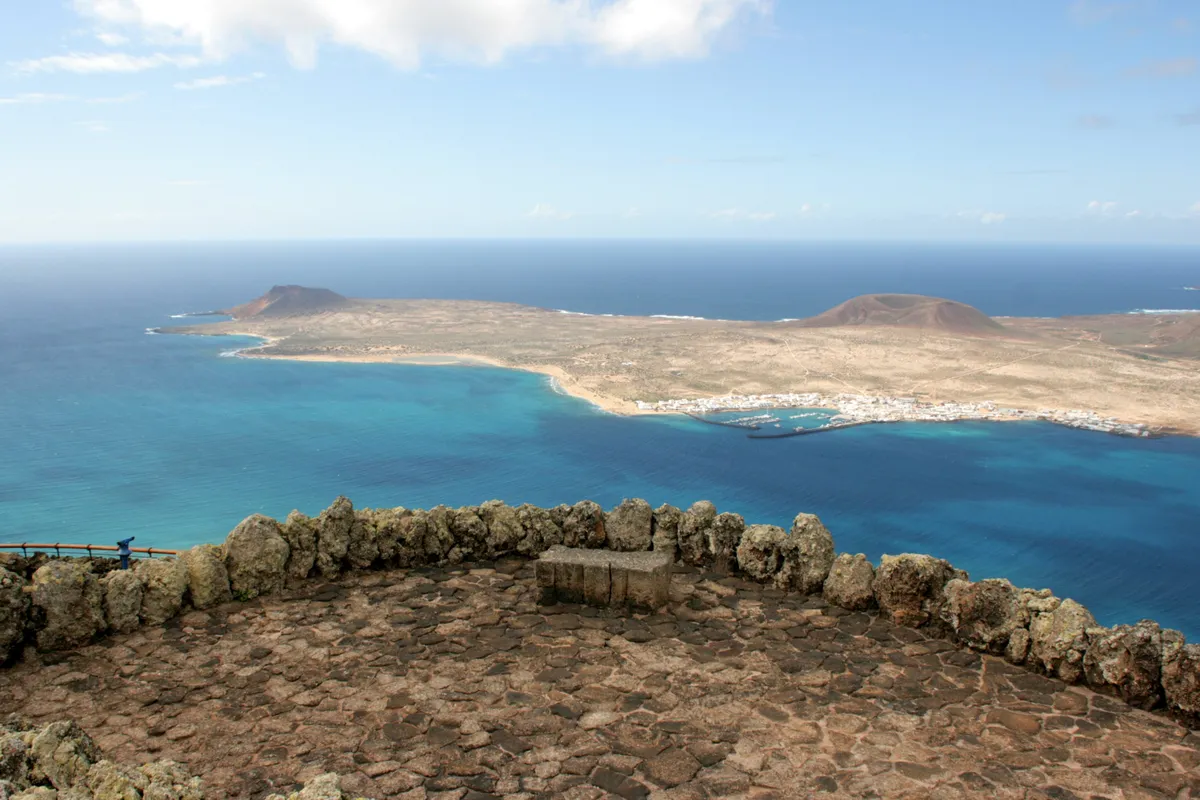
Off the northern tip lies La Graciosa, the eighth inhabited Canary Island, reached by frequent ferries from Órzola. It has sand tracks instead of tarmac roads and beaches such as Playa de las Conchas. AEMET's 1981 to 2010 normals for the Lanzarote airport station give an average January high of 20.7C, an August high of 29.1C and 111 mm of rain a year, so expect dry weather and frequent trade winds.
What to do
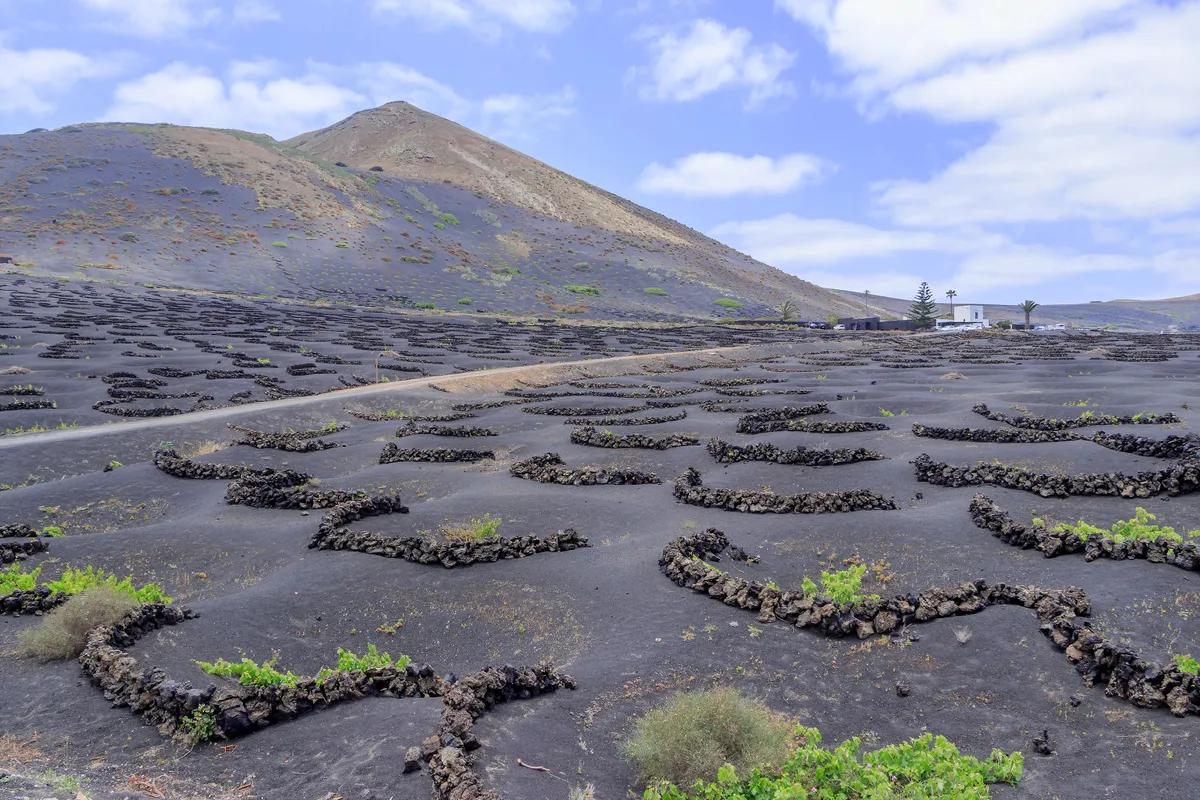
- Tour the lava fields of Timanfaya and the vineyards of La Geria, with a stop for wine tasting.
- Visit the César Manrique Foundation in his former home, built into lava bubbles.
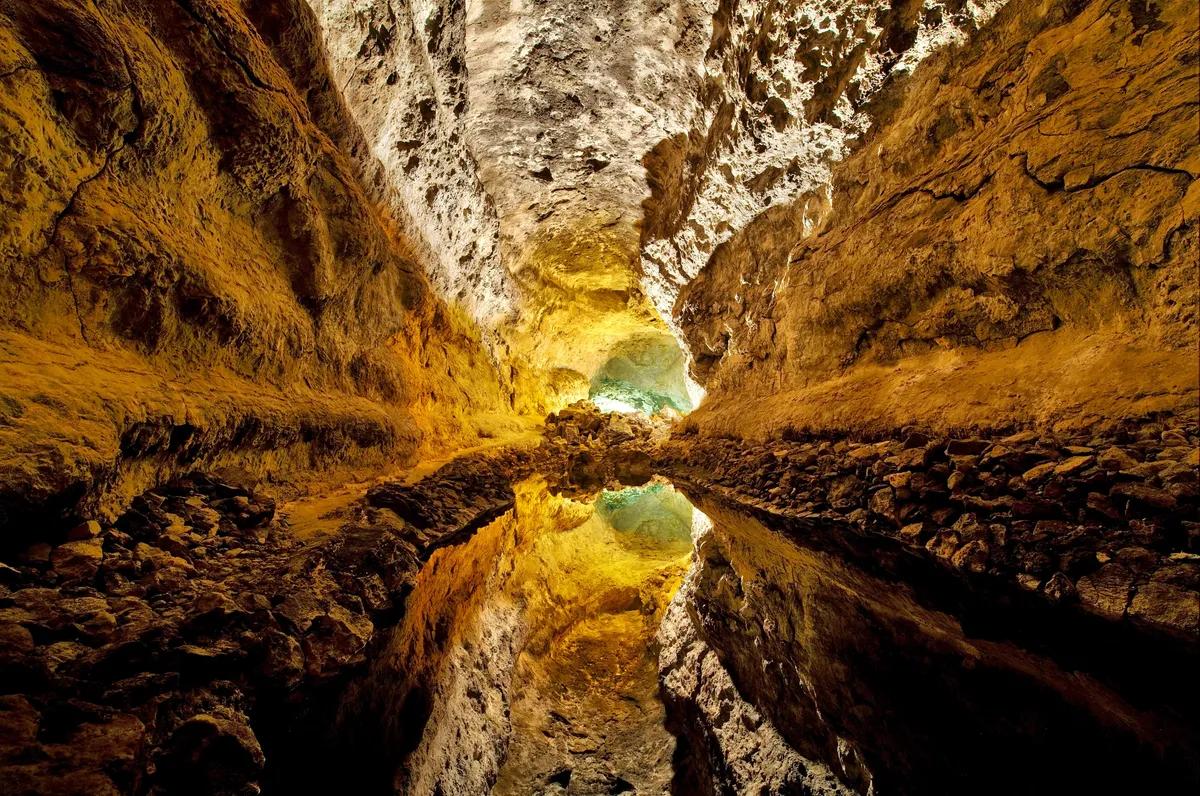
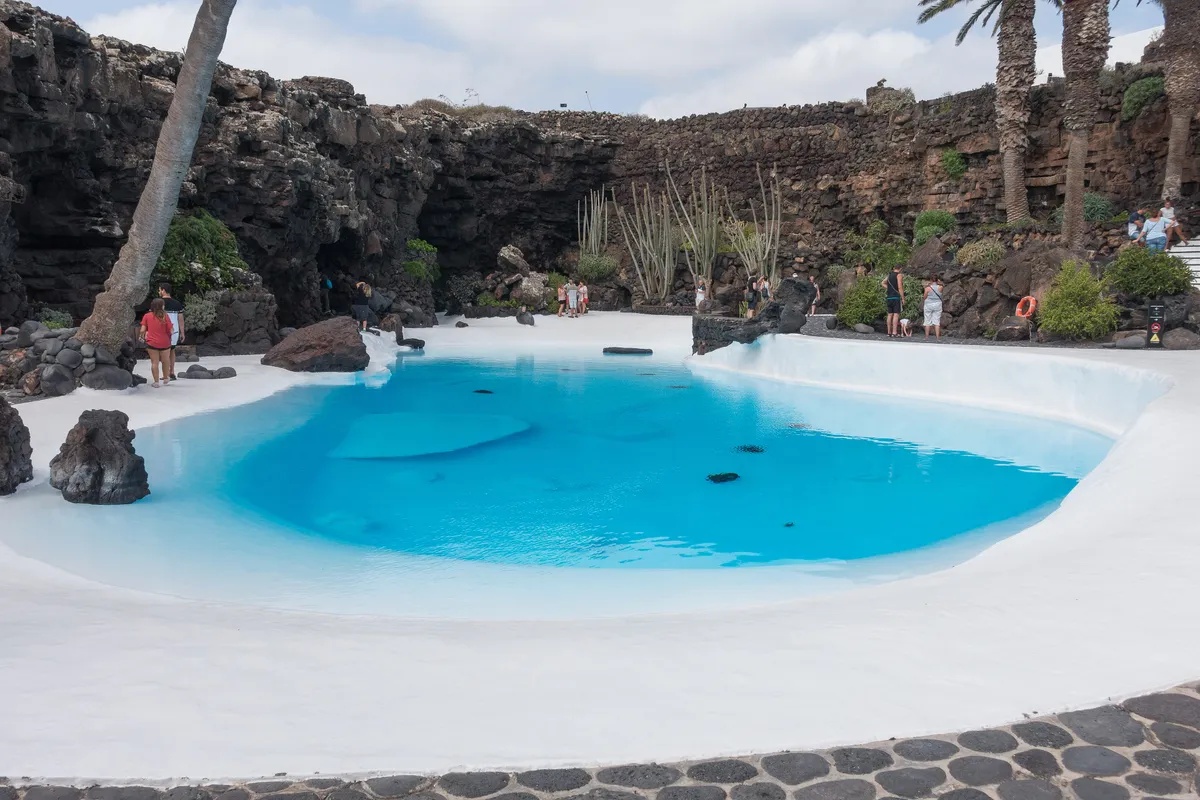
- Explore lava tubes at Cueva de los Verdes and Jameos del Agua.
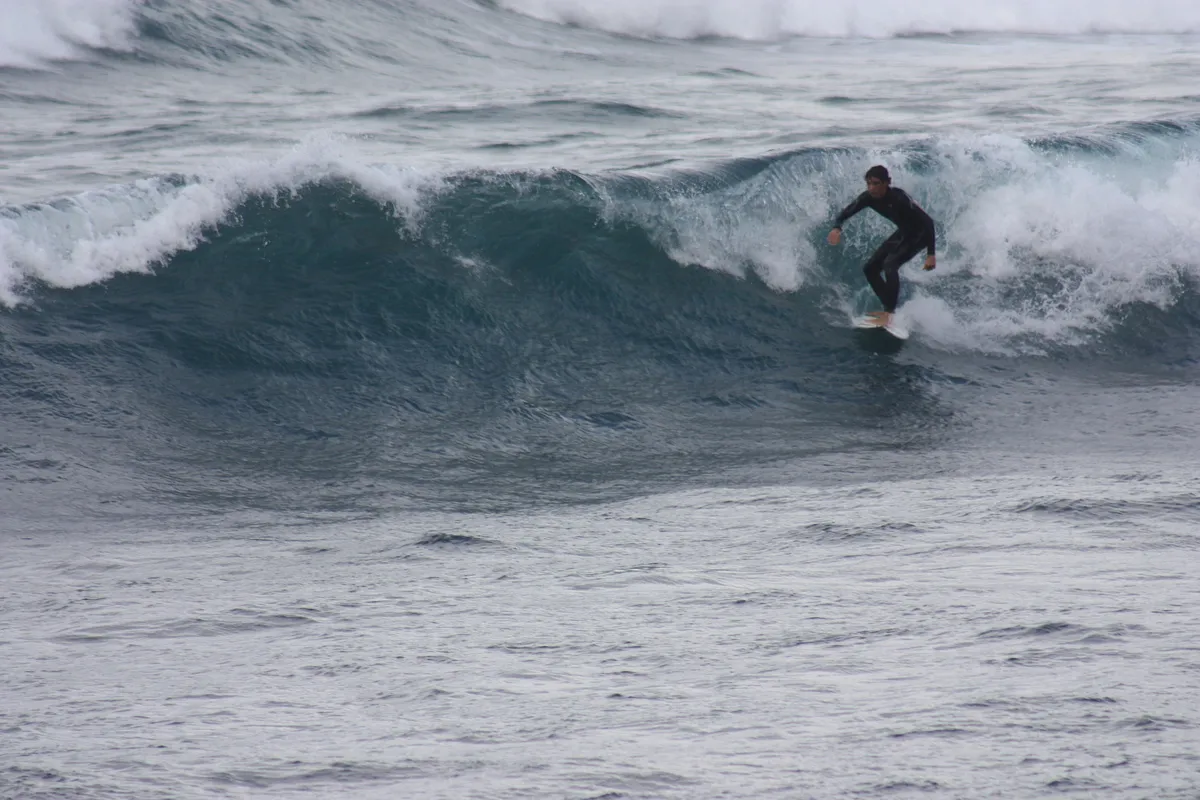
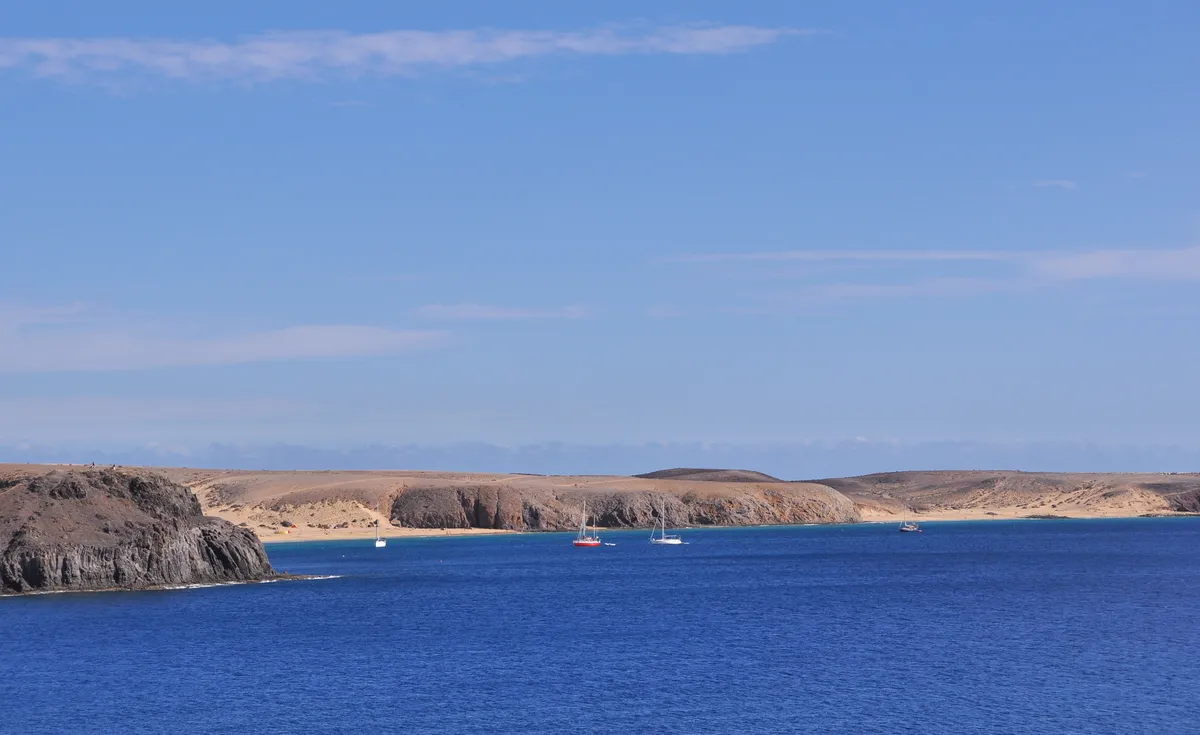
- Swim at Papagayo or Caletón Blanco, and surf at Famara.
- Take the ferry to La Graciosa for a day on its beaches.
- Watch or race in Ironman Lanzarote, or cycle the island's quiet roads.
Lanzarote suits couples and families who want reliable sun, art and landscape over nightlife, and cyclists and triathletes who train on its roads. Compared with Tenerife and Gran Canaria it is flatter, drier and more uniform in style; compared with Fuerteventura it has fewer long beaches but far more sights. Fred. Olsen lists the Playa Blanca to Corralejo crossing at 25 or 35 minutes as of November 2026. Plan with things to do in Lanzarote and the Lanzarote 5-day itinerary.
Practical information
Photo gallery
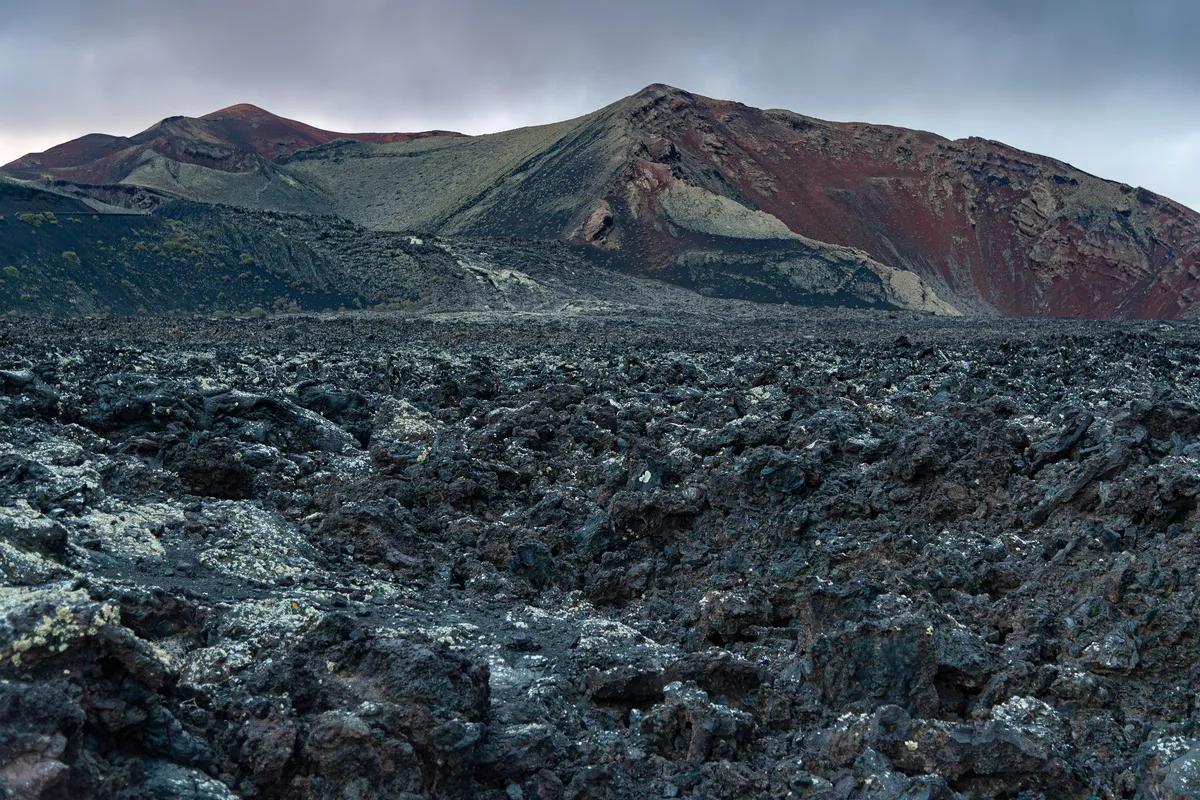
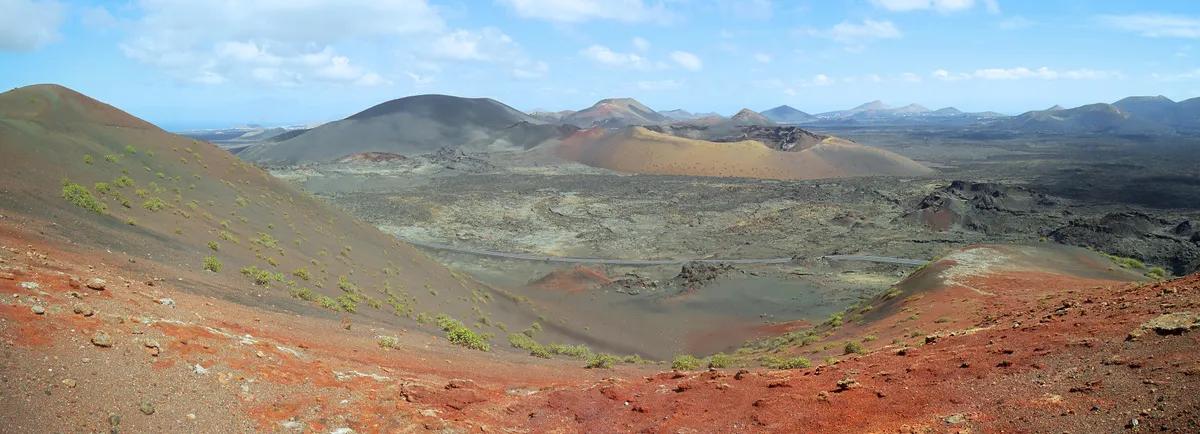
Red and ochre volcanic cones in Timanfaya National Park, Lanzarote
Photo: Luis Miguel Bugallo Sánchez (Lmbuga) via Wikimedia Commons · CC BY-SA 3.0 (https://creativecommons.org/licenses/by-sa/3.0)
Top attractions
Cueva de los Verdes
Jameos del Agua
Jardín de Cactus
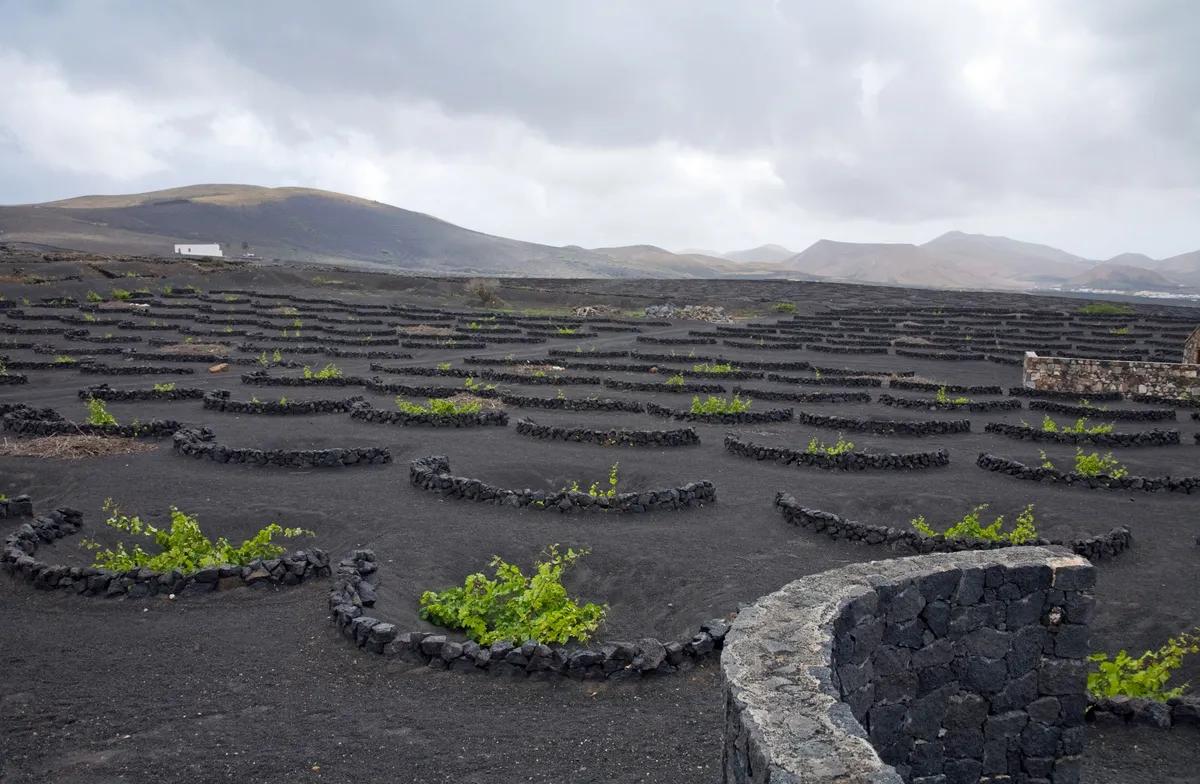
La Geria
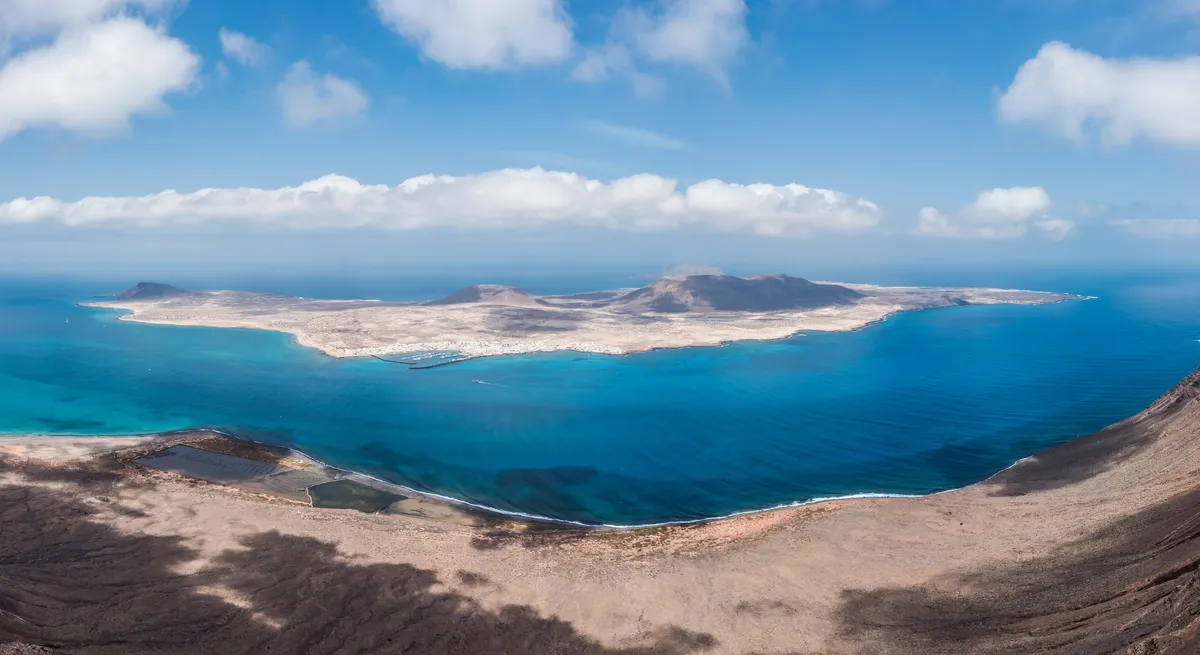
Mirador del Río
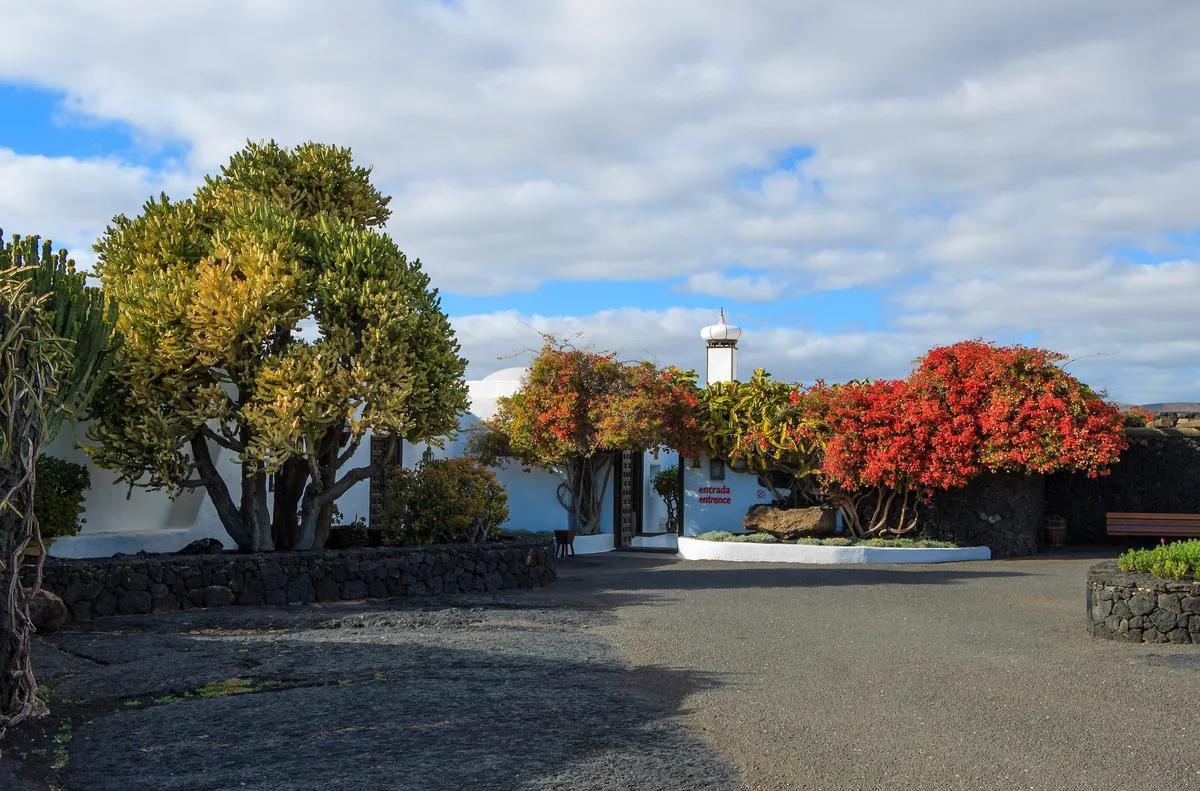
César Manrique Foundation
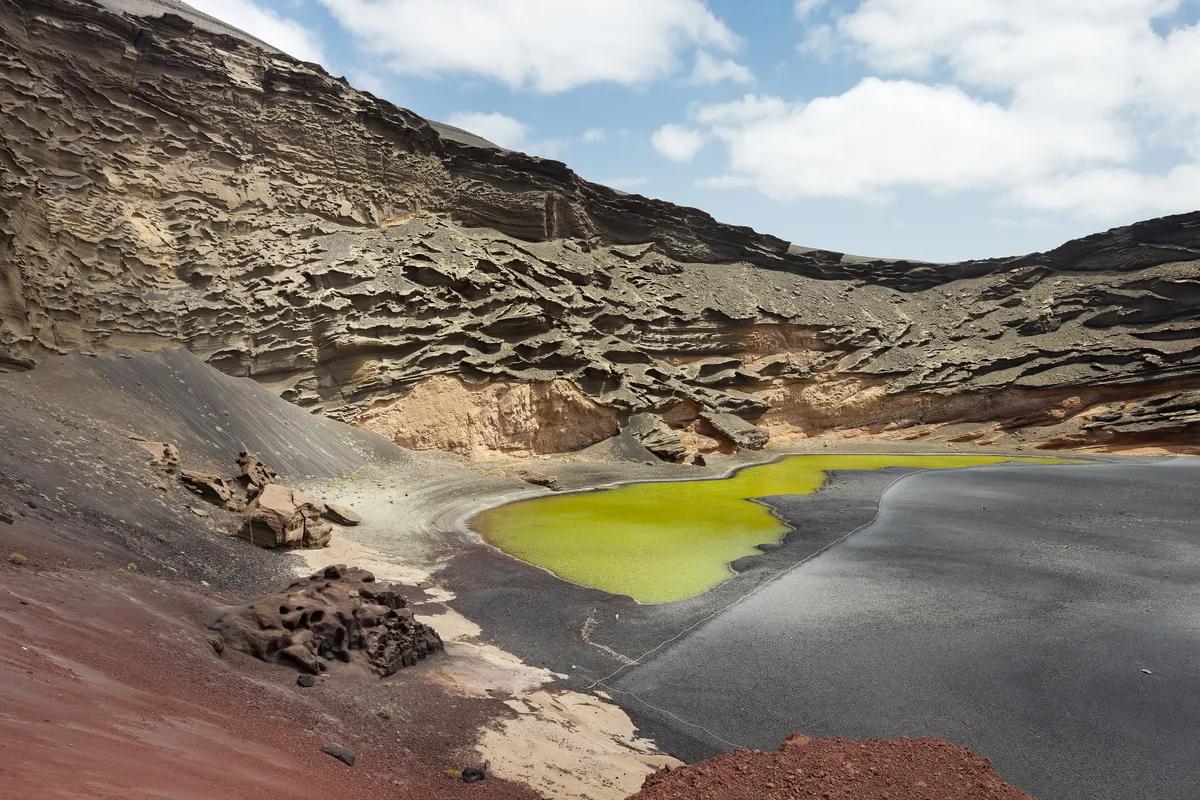
El Golfo Green Lagoon (Charco de los Clicos)
Beaches here
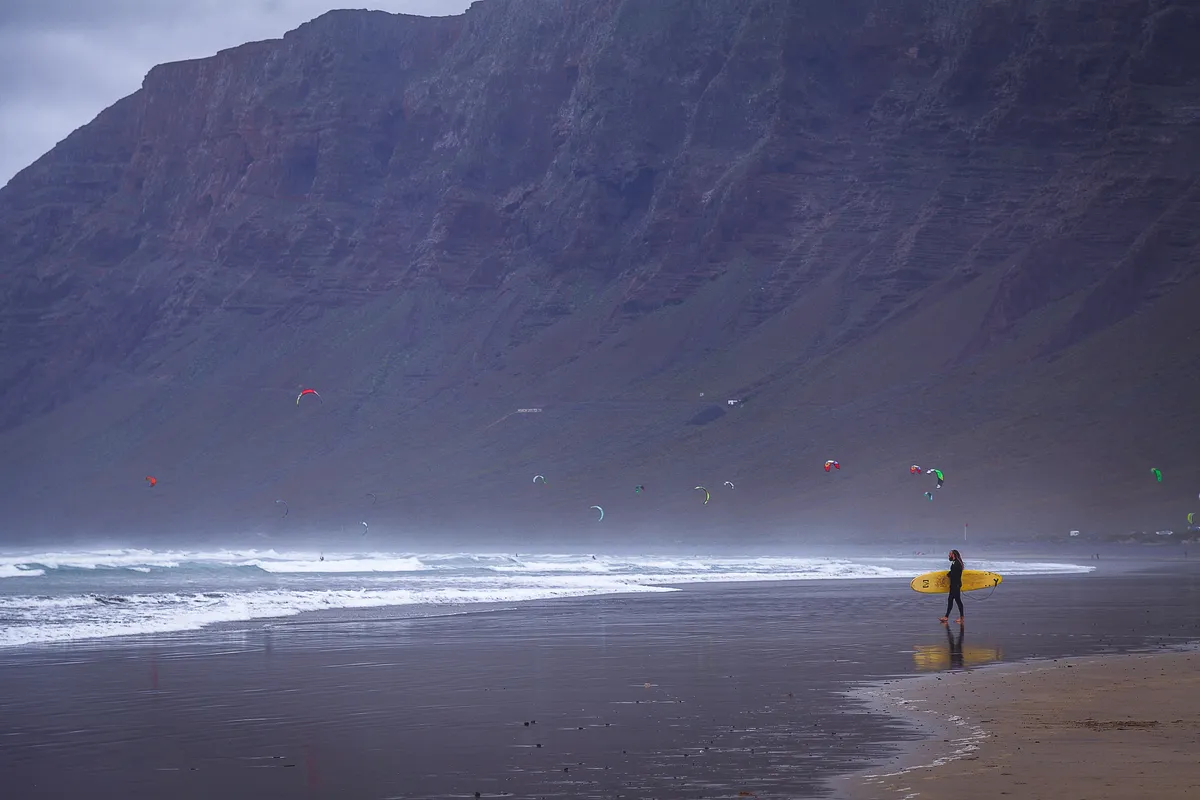
Playa de Famara
Several kilometres of golden sand under the Famara cliffs on Lanzarote's north-west coast. A surf beach with big waves, wind and strong currents.
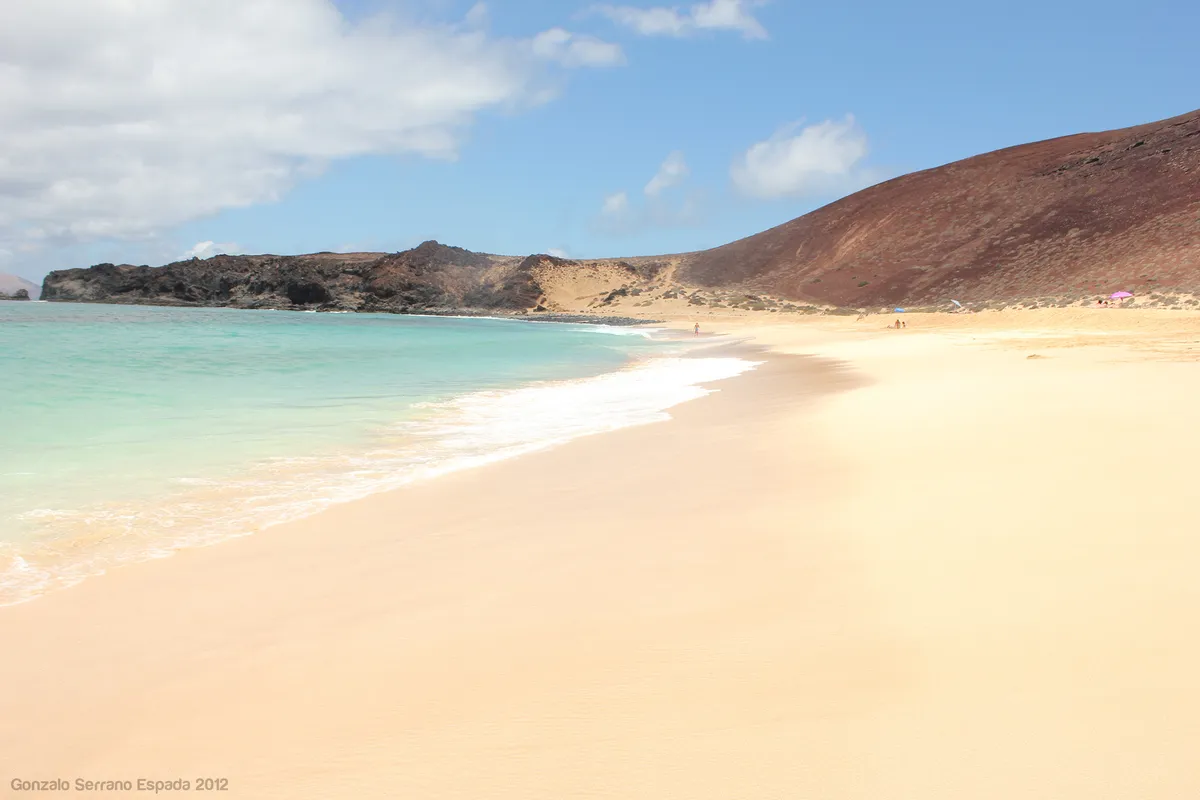
Playa de las Conchas (La Graciosa)
A long, wild beach on the north of La Graciosa, reached by ferry from Lanzarote then on foot or by bike. Stunning views, but strong currents and no lifeguards.
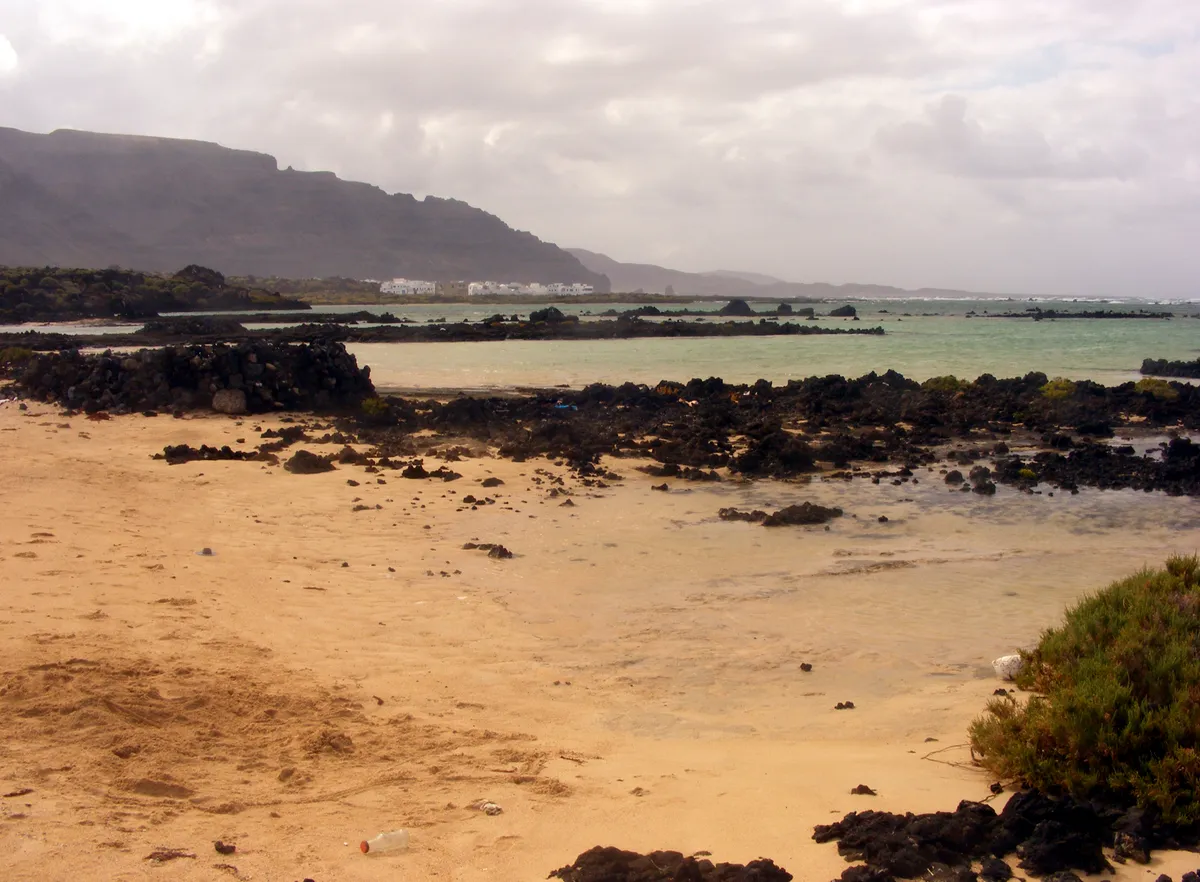
Caletón Blanco
A small white-sand beach set in black lava near Órzola in the far north of Lanzarote. Calm, clear water for swimming and snorkelling, and a car park.
Activities & experiences
Lanzarote questions
What is Lanzarote known for?
+
Lanzarote is known for its volcanic landscapes, including the lava fields of Timanfaya National Park from the eruptions of 1730 to 1736, the vineyards of La Geria grown in hollows in volcanic ash, and the art and architecture of César Manrique. The whole island has been a UNESCO Biosphere Reserve since 1993.
Where should I stay in Lanzarote?
+
Puerto del Carmen is a main resort, with a long beach and plenty of restaurants close to the airport. Playa Blanca, at the southern tip, is quieter and close to the Papagayo beaches. Costa Teguise, north of Arrecife, and the surf village of Famara are other options.
How do you get to La Graciosa?
+
Ferries sail from Órzola, at the northern tip of Lanzarote, to Caleta de Sebo on La Graciosa. Turismo Lanzarote lists departures roughly every 30 minutes as of November 2026; check the operators' current timetables. The island has no tarmac roads, so walking and cycling are practical ways to explore.
Is Lanzarote windy?
+
Often, yes. Lanzarote is open to the trade winds, which keep the heat comfortable and make Famara a surf and kite spot. Sheltered beaches such as Papagayo and the resort beaches on the south and east coasts are calmer.
Can you visit Fuerteventura from Lanzarote?
+
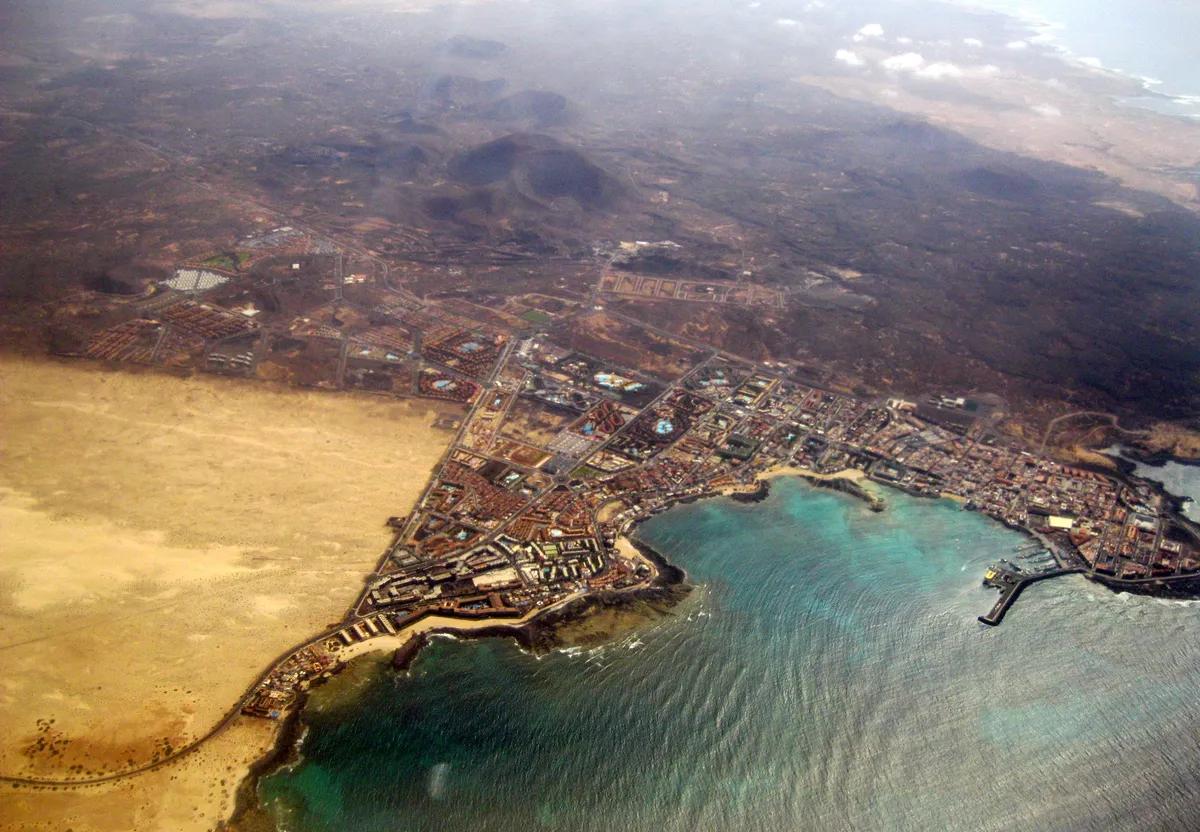
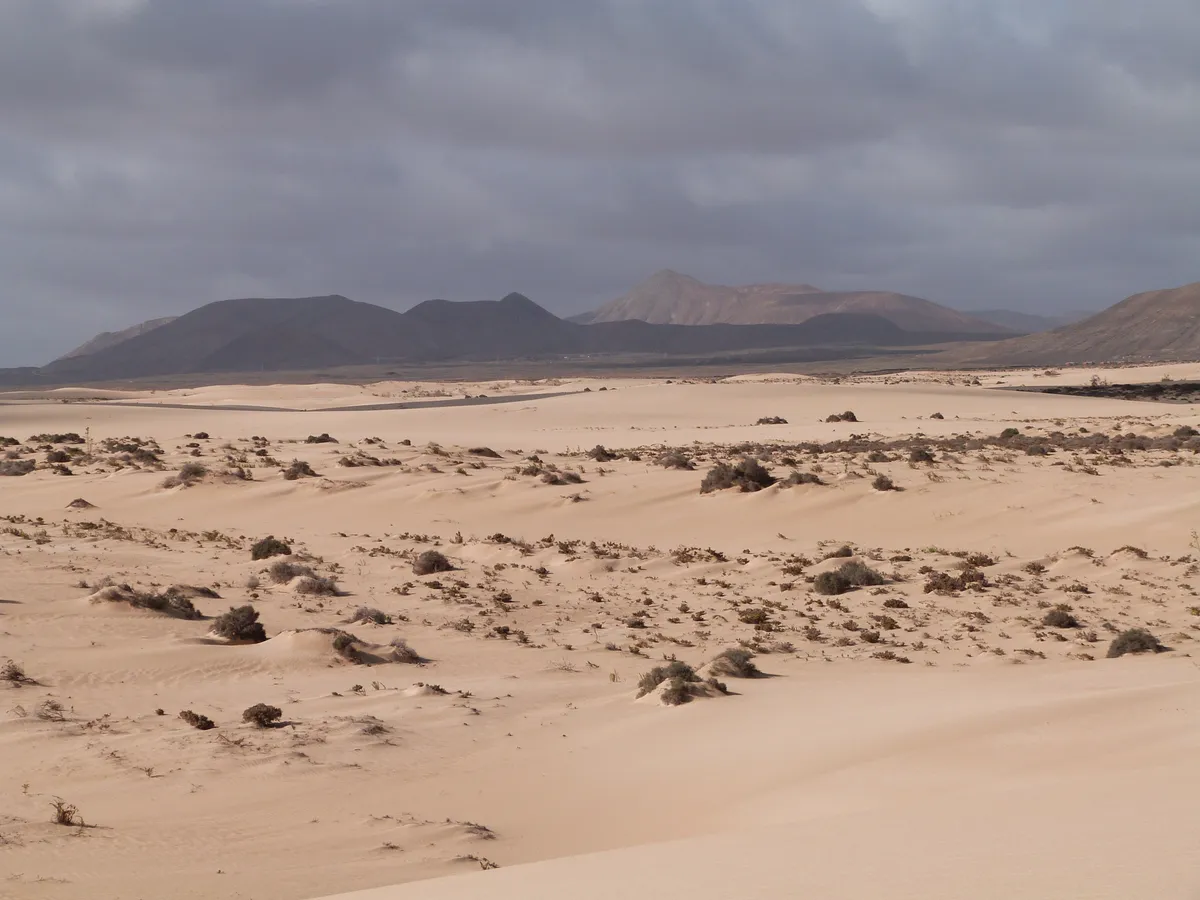
Yes. Ferries cross from Playa Blanca to Corralejo, and Fred. Olsen lists the crossing at 25 or 35 minutes as of November 2026, so a day trip to the Corralejo dunes is easy.
Keep reading
Travel Guides
Helpful guides for planning your trip to Lanzarote
 Planning
Best Time to Visit the Canary Islands: Month by Month
The Canary Islands work all year. October to April is the winter-sun season; May, June, September and October suit a mixed trip. Compare stations by coast.
 Areas Islands
Which Canary Island Is Best? All 8 Islands Compared
Compare all eight Canary Islands on beaches, weather and wind, nightlife, families, walking, quiet and flights from the UK and Ireland, then pick by trip type.
 Beaches Nature
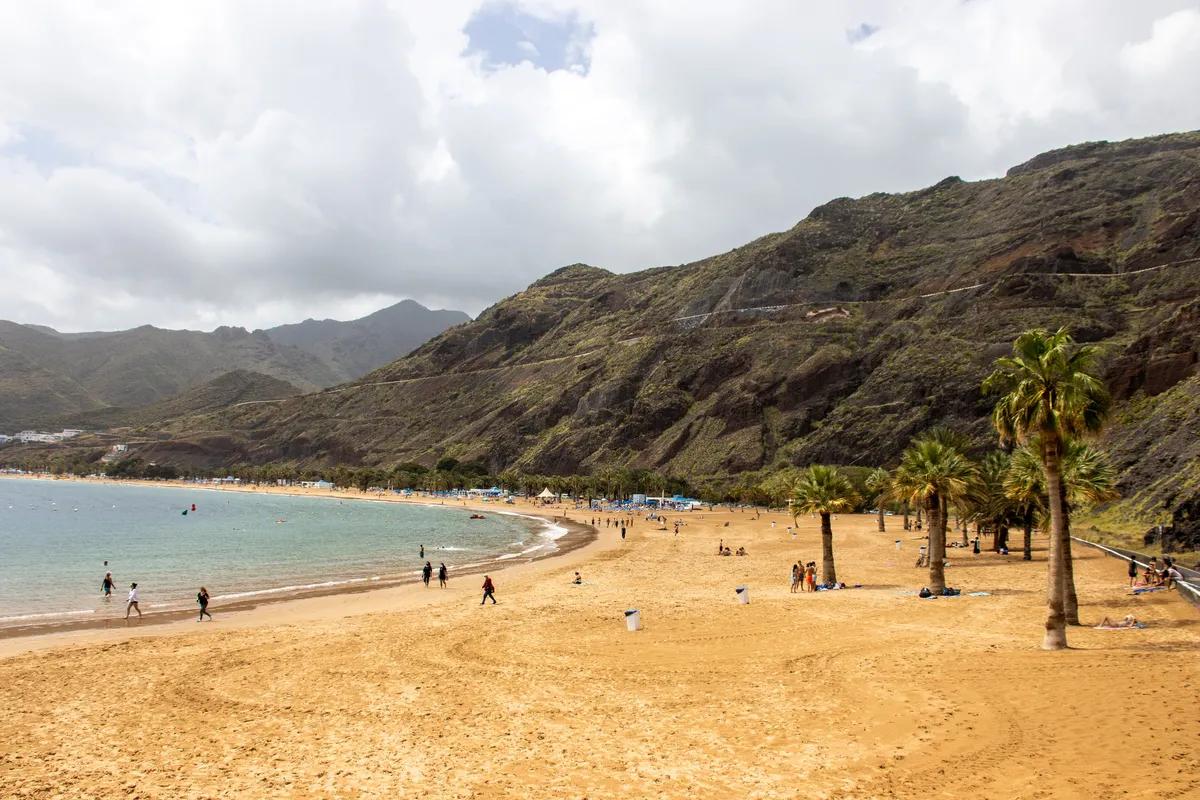
Best Beaches in the Canary Islands: 20 Picks by Island
Twenty Canary Islands beaches on six islands, from Tenerife to La Palma, with honest notes on access, wind and currents and the official 2026 Blue Flag list.
 Experiences
Things to Do in Lanzarote: A Guide by Interest
Things to do in Lanzarote centre on Timanfaya's 1730 to 1736 lava fields, César Manrique sites, Papagayo's coves and the short ferry from Órzola to La Graciosa.
 Planning
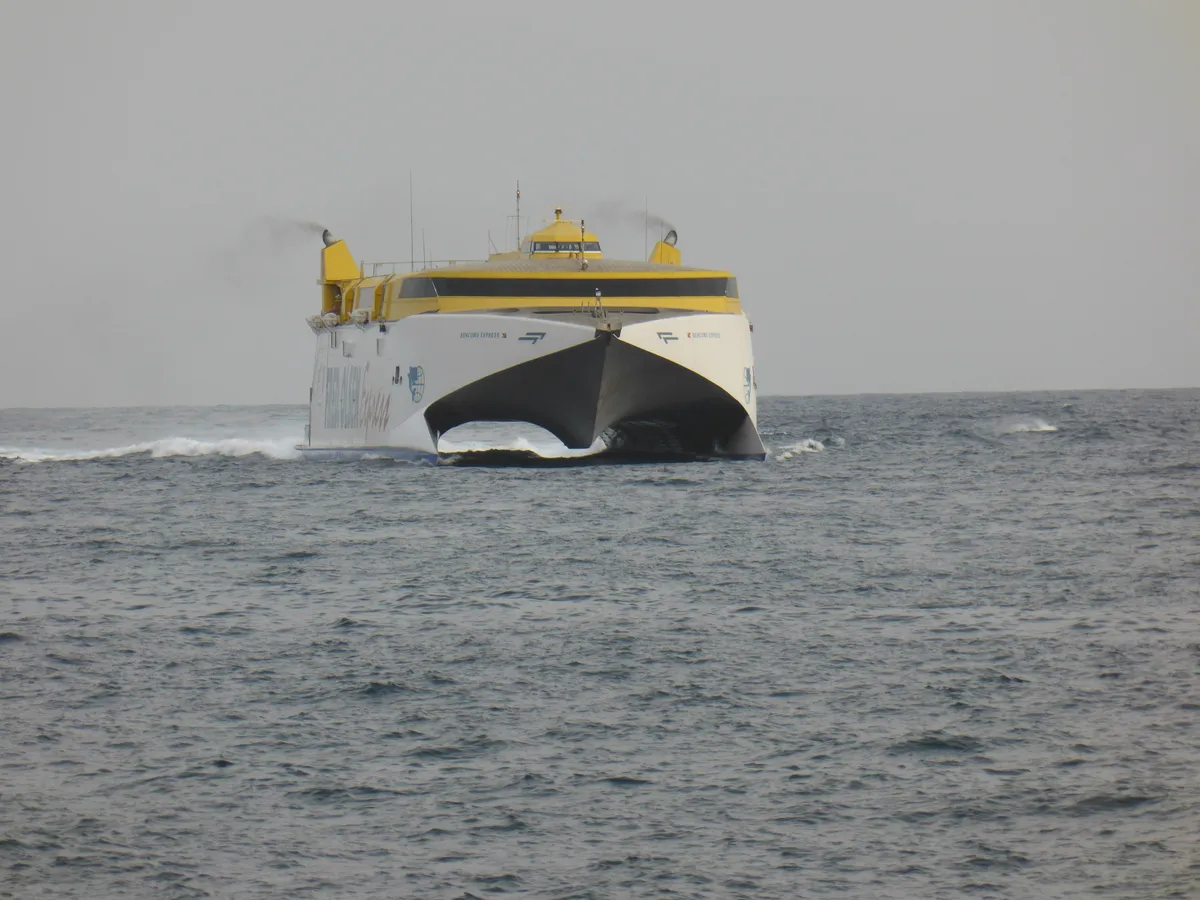
Canary Islands Island Hopping: Ferries, Flights, Day Trips
Ferry routes and crossing times between the Canary Islands from the operators' own pages, the best day-trip pairs, hire cars on board and fare discounts.
 Planning
Canary Islands in Winter: December to February Guide
From December to February the Canary Islands coastal airports average highs of about 21 to 23C and lows of about 14 to 17C, and the sea sits near 19 to 21C.
Keep exploring
Nearby Destinations
Explore more places near Lanzarote