Snorkelling in the Canary Islands
Clear Atlantic water, from El Hierro's calm south to La Graciosa
Snorkelling in the Canary Islands
Snorkel in the Canary Islands, from the sheltered marine reserve at La Restinga on El Hierro to the reserve around La Graciosa, with tips on swell, currents and gear.
The Atlantic around the Canary Islands is clear and full of fish, but it is open ocean rather than a calm inland sea, so good snorkelling depends on picking a sheltered spot and a quiet day. Two marine reserves, one off El Hierro and one around La Graciosa off Lanzarote, protect some of the richest water.
La Restinga, El Hierro
The marine reserve off La Restinga covers 1,180 hectares on El Hierro's south-west coast, the westernmost of the islands. Spain's fisheries ministry describes its water as calm for long periods, sheltered from the trade winds and tropical in character, with species not found in the rest of the archipelago. The seabed falls steeply, passing 300 metres inside the reserve, so the shallows near the shore drop away fast. La Restinga is also the island's main base for scuba diving.
La Graciosa and the north of Lanzarote
The marine reserve around La Graciosa and the islets north of Lanzarote, created in 1995, covers 70,700 hectares. Scuba diving inside it needs prior authorisation and is banned in some zones; follow local signs and any instructions from the reserve wardens. La Graciosa is a 25 to 30 minute ferry ride from Órzola (see island hopping), and the island has no asphalted roads. For its beaches, see Playa de las Conchas.
Elsewhere
On the larger islands, look for sheltered bays, harbour walls and rock pools on days with little swell, and ask a local dive centre where the water is calm that day. Exposure varies by bay, wind and swell; judge each location on the day. If you want to see more than the shallows, ask a qualified local instructor which guided activity suits your swimming ability and the conditions.
Safety
- Check the sea forecast and the beach flag. Atlantic swell can build quickly, even on sunny days.
- Never snorkel alone, and stay close to shore unless you are with a guide.
- Water temperatures are cooler than many visitors expect, especially in winter; a thin wetsuit helps.
- Do not touch or feed marine life, and do not take shells, rocks or sea creatures out of the water.
Pair a snorkelling day with whale and dolphin watching, and see the best beaches in the Canary Islands for places to swim. In an emergency at sea, call 112.
What to know before you go
Plan this experience
The essentials for booking Snorkelling in the Canary Islands and getting there.
Photo gallery
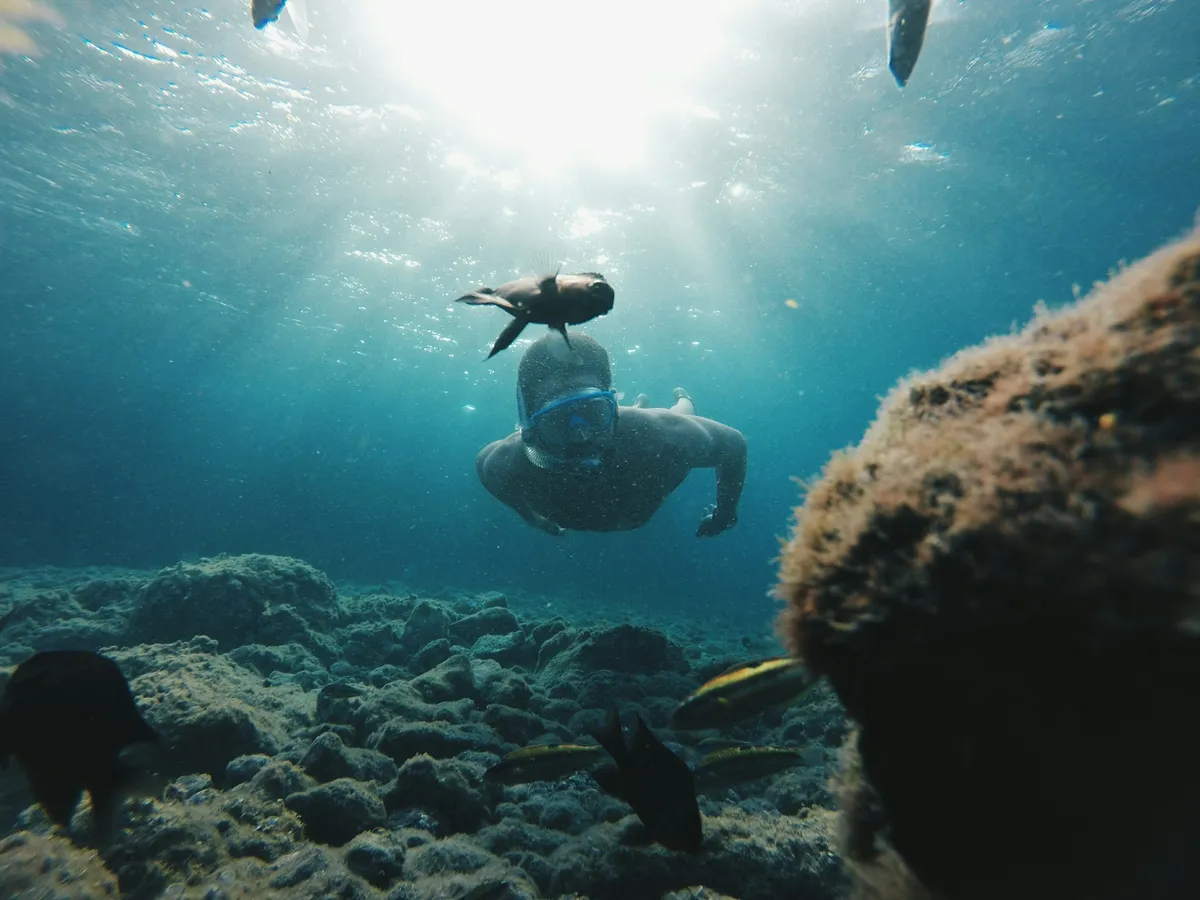
Swimmer underwater above rocky seabed with fish and sunlight from the surface
Photo by Cristian Palmer on Unsplash · Unsplash License
Frequently asked questions
Keep reading
Travel Guides
Helpful guides for planning your trip to El Hierro
 Areas Islands
Which Canary Island Is Best? All 8 Islands Compared
Compare all eight Canary Islands on beaches, weather and wind, nightlife, families, walking, quiet and flights from the UK and Ireland, then pick by trip type.
 Planning
Canary Islands Public Holidays 2027: Full Calendar
The Canary Islands have 11 archipelago-wide public holidays in 2027, plus one island holiday on each island and two local holidays in each municipality.