Best Beaches in the Canary Islands: 20 Picks by Island
Twenty Canary Islands beaches on six islands, from Tenerife to La Palma, with honest notes on access, wind and currents and the official 2026 Blue Flag list.
By Canary Islands 365 Editorial Reviewed by Alex Borshch, Founder & Editor
Published November 16, 2026 · 10 min read
The Canary Islands have two kinds of coast, and choosing a beach is mostly about knowing which one you are on. Sheltered south and east shores, often with breakwaters or reefs, give calm water for swimming. Exposed north and west coasts face the open Atlantic, with big surf, strong currents and beaches where a swim can be dangerous on an ordinary day. Sand colour varies too: golden and white on Fuerteventura, much of Gran Canaria and parts of Lanzarote; dark volcanic sand on much of Tenerife and La Palma.
Below are twenty beaches, first island by island and then sorted by what they suit. Each name links to its own page with fuller details. Blue Flag status comes from the official list for 2026 published by ADEAC, the Blue Flag operator in Spain, which awarded 52 beaches in 29 municipalities across the Canary Islands. A Blue Flag means water quality, safety and services met the standard for that season; it says nothing about how beautiful a beach is, and many fine wild beaches never apply.
Before you swim: flags, currents and lifeguards
Atlantic swell can arrive on a sunny, calm-looking day. On beaches with lifeguards, a green flag means swimming is allowed, yellow means take care and red means do not go in. On wild beaches there may be no flag and no one watching. Choose a beach with lifeguards, follow their instructions and stay out of the water when waves are breaking hard. The emergency number is 112 on every island; see emergency contacts.
Tenerife
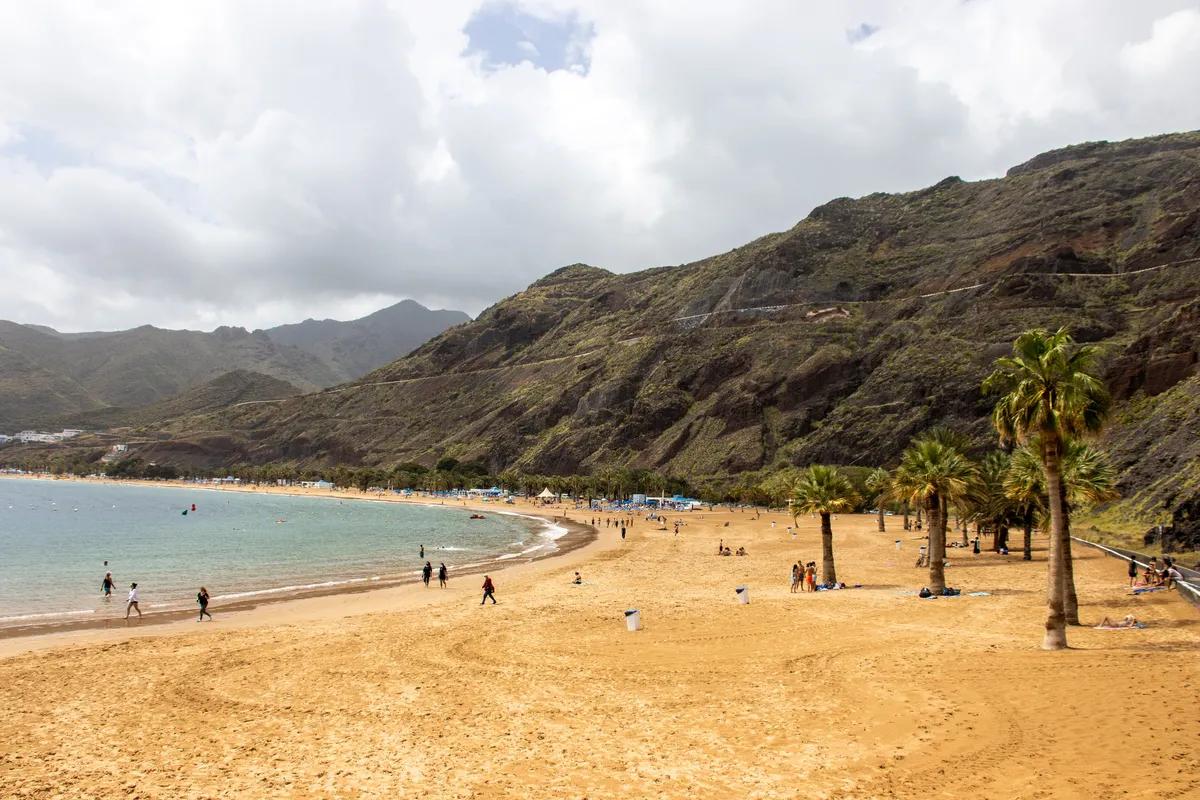
Playa de las Teresitas is the beach for Santa Cruz, by the village of San Andrés in the north-east. The island tourism board lists it at 1,300 metres of pale sand, with breakwaters built to calm the waves, plus toilets, showers and bars. Check the flags and lifeguard advice before swimming.
Playa del Duque in Adeje is the smart end of Costa Adeje: 390 metres of sand with sun loungers, changing rooms and a large car park. El Duque (Sur) holds a Blue Flag for 2026.
Playa de El Médano, in Granadilla de Abona near Tenerife South Airport, is 750 metres of fine grey sand below the Montaña Roja volcanic cone. The tourism board notes that the far end from the town is the best place for windsurfing and kitesurfing. That says a lot: it is often windy, which suits sailors more than sunbathers.
Playa Jardín in Puerto de la Cruz is a dark-sand beach landscaped with gardens, a project by the Lanzarote artist César Manrique. It faces the north Atlantic, so the surf can be strong; watch the flags.
Playa de Benijo lies at the far north-east tip of the island, below the Anaga Rural Park. It is a wild black-sand beach reached down a path from the road, with sea stacks offshore and big Atlantic waves. Go for the scenery and the sunset; do not use a calm-looking sea as a reason to swim.
Gran Canaria
Playa de las Canteras is the city beach of Las Palmas de Gran Canaria, a long strip of golden sand with a walkway full of cafés. Its natural reef, La Barra, protects a large part of the beach from the open sea, giving calm water for swimming and snorkelling. The southern end, near the Alfredo Kraus Auditorium, is where surfers gather.
Playa de Maspalomas runs along the edge of the Maspalomas dunes nature reserve to the 56-metre lighthouse, in the resort area of Maspalomas. Long stretches have no buildings, and parts are traditionally used by naturists. Blue Flag for 2026.
Playa del Inglés joins Maspalomas to the north-east and is the busy, fully serviced end of the same sweep of sand, with sunbeds and beach bars. Check local surf conditions before entering the water. Blue Flag for 2026 (listed as El Inglés).
Playa de Amadores, in the south-west near Puerto de Mogán, is a man-made beach of light sand behind protective breakwaters. The island tourism board describes its sea as gentle, but check the flags and supervise children closely.
Playa de Güigüí is the opposite: a remote beach on the west coast with no road. You reach it by a long, steep hike over the ridge from the Tasartico area, or by boat. Do not rely on finding services or lifeguards; check the sea conditions and prepare for a strenuous return walk. Take plenty of water and start early.
Lanzarote and La Graciosa
Playas de Papagayo are a string of coves east of Playa Blanca in the south of Lanzarote. The island tourism board lists fine white sand and calm water, with parking but no public transport. Access is by an unpaved track, and services are limited, so bring what you need.
Playa de Famara is a long, open beach on the north-west coast below the Famara cliffs. The tourism board lists strong waves and wind, hazard signs and lifeguards, and it is Lanzarote's surfing beach. Strong surf makes this a poor choice for casual swimming; follow the lifeguards and hazard signs.
Playa Grande is the main beach of Puerto del Carmen: about 1,190 metres of golden sand with calm water, lifeguards, sunbeds, showers and a promenade. It regained its Blue Flag for 2026 (listed as Grande (Blanca), Tías).
Caletón Blanco, near Órzola in the north of the island (municipality of Haría), is a set of white-sand coves among black lava. The tourism board lists calm water and suitability for families; check the tide and conditions around the rocks. It is a good stop before or after the boat to La Graciosa.
Playa de las Conchas on La Graciosa is a wide, empty beach facing the islet of Montaña Clara. Getting there means a boat from Órzola and then a walk, bike ride or 4x4 taxi across the island, using the island’s unpaved tracks. The currents here are strong and swimming can be dangerous; many visitors come for the view and the walk rather than the water. Our island-hopping guide covers the ferry.
Fuerteventura
Grandes Playas de Corralejo run south of Corralejo along the edge of the Corralejo dunes natural park, with the main road behind the dunes and the island of Lobos offshore. Wind is common and some stretches catch waves, so check conditions before swimming. Grandes Playas holds a Blue Flag for 2026.
Playa de Sotavento on the Jandía peninsula in the south is a very long beach where a lagoon forms behind a sandbar at low tide. It is known for windsurfing and kitesurfing: the steady trade wind that makes it ideal for sailors can make an afternoon on the sand gritty.
Playa de Cofete lies on the remote north-west side of Jandía, reached by an unpaved mountain track from the Morro Jable side. It is spectacular, with the Jandía massif behind a huge empty beach, but the Atlantic here can be hazardous and you should not rely on lifeguard cover. Do not swim. Check your hire car terms before driving the track.
Playa de La Concha and the El Cotillo lagoons are on the north-west coast near the village of El Cotillo. A rocky reef shelters La Concha and the lagoons beside it, so the water inside is calmer than the open coast nearby; it is a favourite with families. La Concha holds a Blue Flag for 2026.
La Palma
Playa de Tazacorte, at Puerto de Tazacorte on the west coast of La Palma, is a black-sand beach beside the harbour, with restaurants nearby. It holds a Blue Flag for 2026 (listed as El Puerto de Tazacorte). Combine it with the Caldera de Taburiente National Park or the Roque de los Muchachos.
The same beaches, sorted by what they suit
Families and calm water
Playa de las Teresitas, Playa del Duque, Playa de las Canteras (inside the reef), Playa de Amadores, Playa Grande in Puerto del Carmen, Caletón Blanco, La Concha at El Cotillo and Playa de Tazacorte. Check the individual beach page for nearby services.
Long natural beaches
Playa de Maspalomas, Playa del Inglés, the Grandes Playas de Corralejo and Playa de Sotavento: long walks, dunes or lagoons, and room for a beach walk.
Wind and waves
El Médano and Sotavento for windsurfing and kitesurfing; Famara and the surf end of Las Canteras for surfing. Corralejo's beaches also catch wind and swell.
Wild beaches reached on foot or by track
Benijo, Güigüí, Papagayo, Playa de las Conchas and Cofete. Bring water, shade and food, check access and lifeguard cover, and treat the sea at Güigüí, Las Conchas and Cofete with real caution.
Blue Flags in this guide (2026)
From the twenty beaches above, the official 2026 ADEAC list includes: Playa del Duque (El Duque Sur, Adeje), Playa de Maspalomas and Playa del Inglés (San Bartolomé de Tirajana), Playa Grande (Tías, Lanzarote), Grandes Playas and La Concha (La Oliva, Fuerteventura) and El Puerto de Tazacorte (La Palma). Las Canteras, Las Teresitas, El Médano, Amadores, Papagayo and the wild beaches are not on the 2026 list.
When to go and planning
The islands have beach weather all year, but the sea is coolest in late winter and the trade wind is usually strongest in summer. See best time to visit and the weather page. For snorkelling and diving spots, see snorkelling. To choose an island first, read which Canary Island is best, and browse every listing on the beaches hub.
Frequently Asked Questions
Which Canary Island has the best beaches?
For long golden or white sand, Fuerteventura and the south of Gran Canaria are hard to beat. Lanzarote has the sheltered coves of Papagayo and the town beach of Puerto del Carmen. Tenerife offers pale sand at Las Teresitas and Playa del Duque, and black sand at Playa Jardín and Benijo.
Which Canary Islands beaches are best for children?
Calm, serviced beaches: Playa de Amadores and Las Canteras (inside the reef) on Gran Canaria, Las Teresitas and Playa del Duque on Tenerife, Playa Grande on Lanzarote and La Concha at El Cotillo on Fuerteventura. Avoid Cofete, Famara, Benijo and Las Conchas with small children in the water.
Which Canary Islands beaches have a Blue Flag in 2026?
ADEAC awarded 52 beaches in the Canary Islands for 2026. Among the beaches in this guide, Playa del Duque, Maspalomas, Playa del Inglés, Playa Grande in Puerto del Carmen, Grandes Playas de Corralejo, La Concha at El Cotillo and Puerto de Tazacorte are on the list.
Is it safe to swim at Cofete?
No. Cofete is an exposed Atlantic beach with hazardous sea conditions. Do not rely on lifeguard cover. Enjoy the walk and the view, and swim at a sheltered beach instead.
Are there black sand beaches in the Canary Islands?
Yes, many, especially on Tenerife and La Palma. Playa Jardín in Puerto de la Cruz, Benijo in Anaga and Playa de Tazacorte on La Palma are good examples. Dark sand gets very hot in the afternoon sun, so bring beach shoes.
Can you reach Playa de Güigüí by car?
No. Güigüí on Gran Canaria's west coast has no road. You walk in over a steep ridge or arrive by boat, so plan for a long, hot hike with no services at the beach.
Where is the best beach for kitesurfing in the Canary Islands?
Playa de Sotavento on Fuerteventura and El Médano on Tenerife are established options; conditions vary with the wind. Learn with a licensed school and follow the zones marked for kites and swimmers.
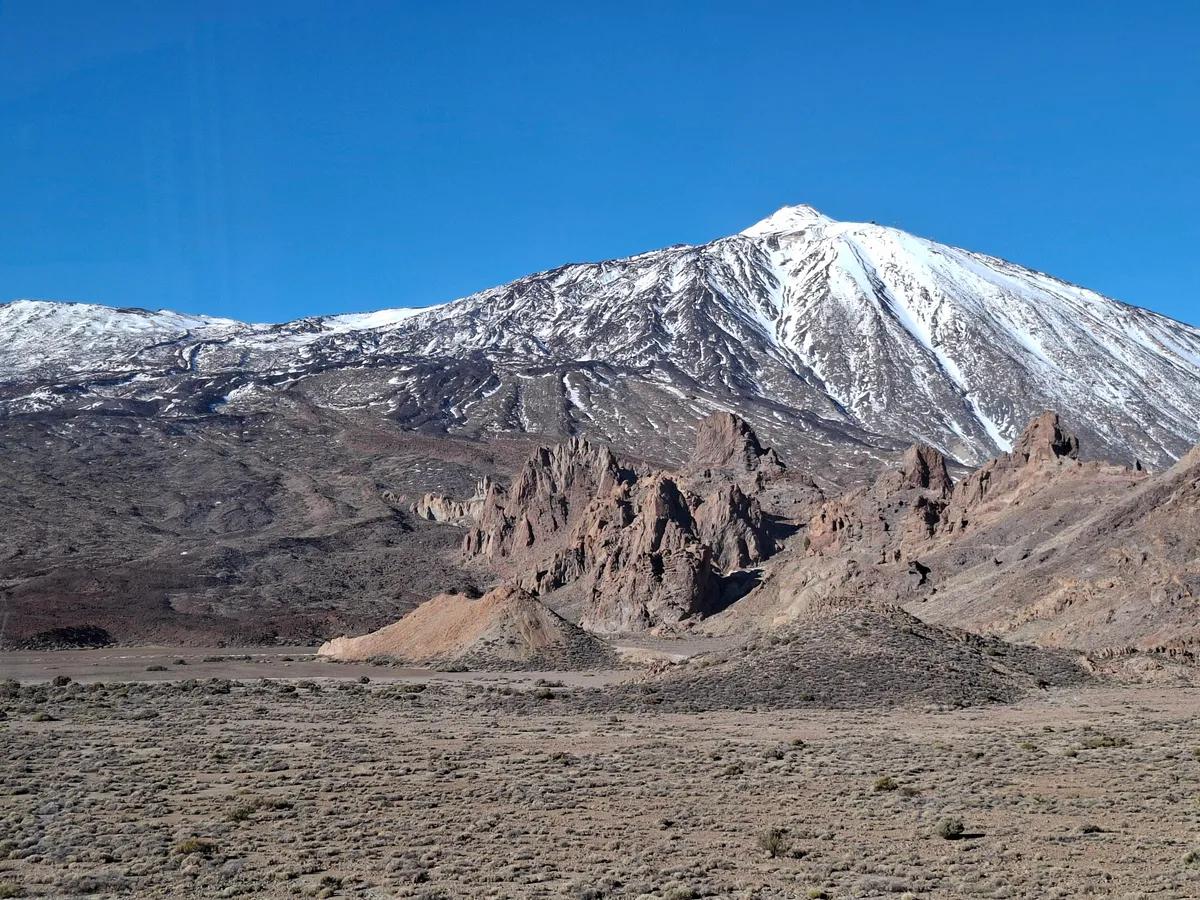
Tenerife
This guide covers Tenerife. Explore more about this destination.
View Destination
Photo gallery
Golden sand and palm trees at Playa de Las Teresitas below green hills, Tenerife
Photograph by Mike Peel (www.mikepeel.net). via Wikimedia Commons · CC BY-SA 4.0 (https://creativecommons.org/licenses/by-sa/4.0)