Fuerteventura
Fuerteventura is the Canary Island of long beaches and wind: Corralejo's dunes in the north, Sotavento and Cofete on the Jandía peninsula, and a quiet, dry interior.
Fuerteventura
Fuerteventura is the Canary Island of long beaches and wind: Corralejo's dunes in the north, Sotavento and Cofete on the Jandía peninsula, and a quiet, dry interior.
Fuerteventura is the second-largest of the Canary Islands and the closest to the African coast, a long, dry island of open plains, eroded volcanic hills and beaches. It is best known for the length and number of its sandy beaches and for the steady trade winds that make it a centre for windsurfing and kitesurfing. The whole island, with a band of sea around it, has been a UNESCO Biosphere Reserve since May 2009.
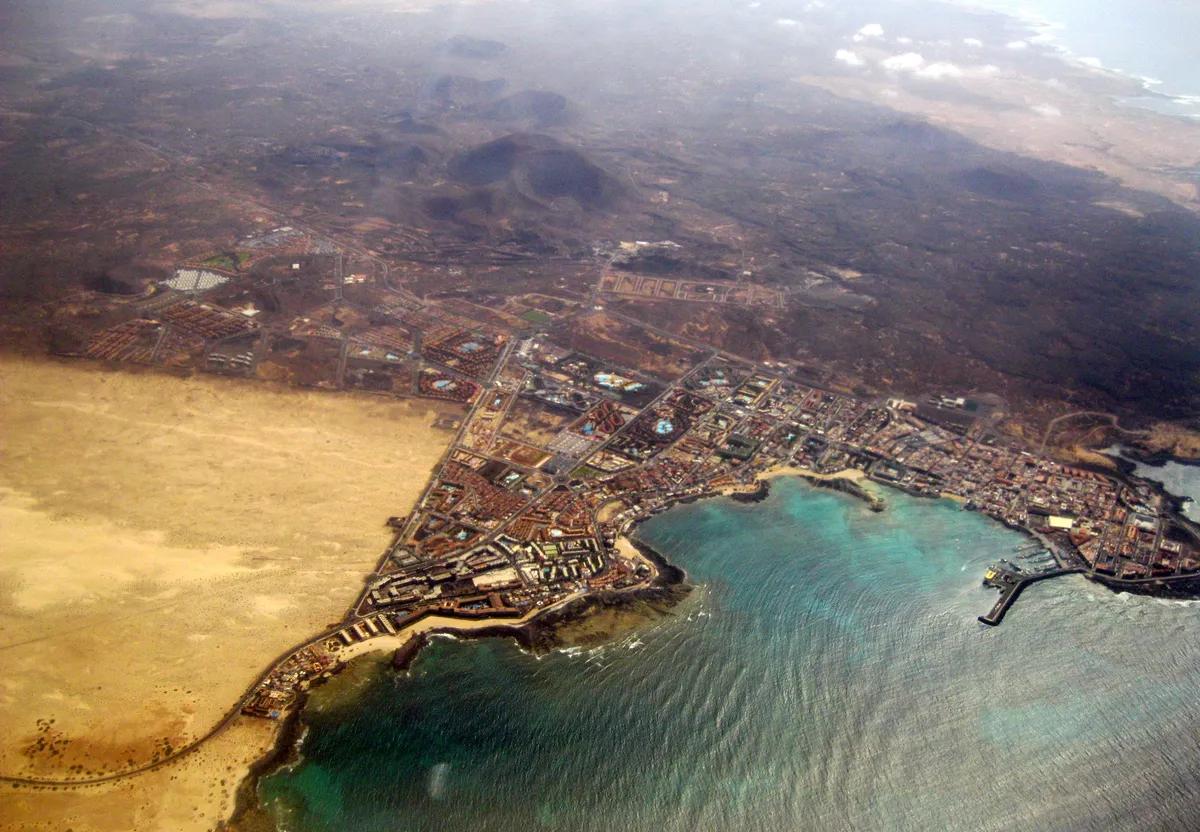
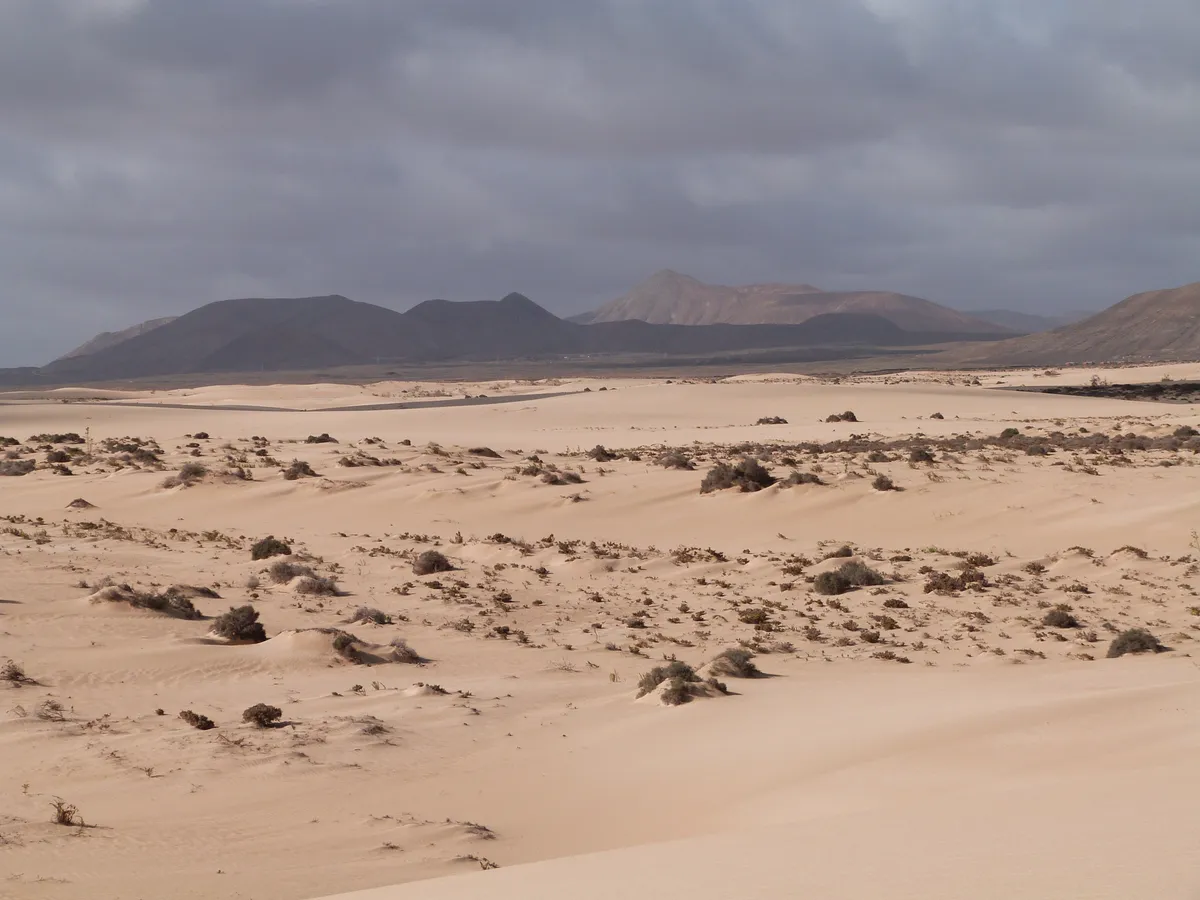
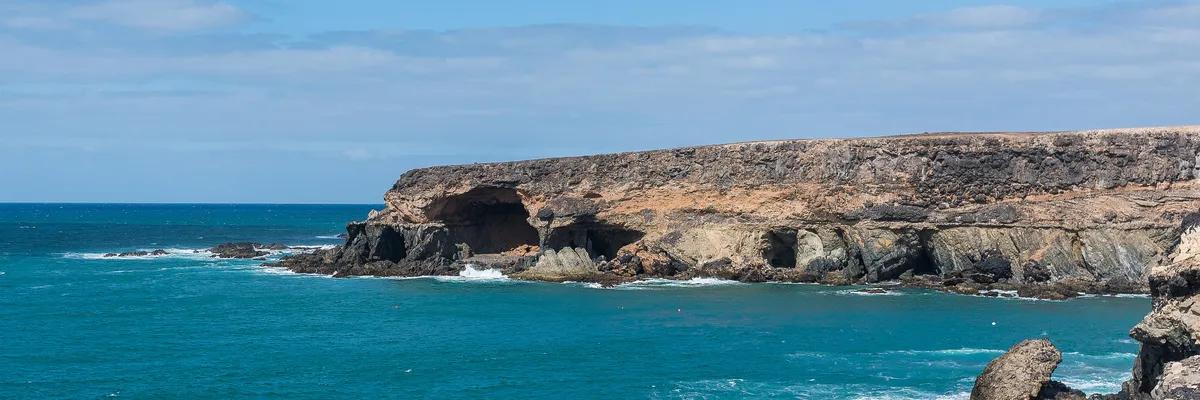
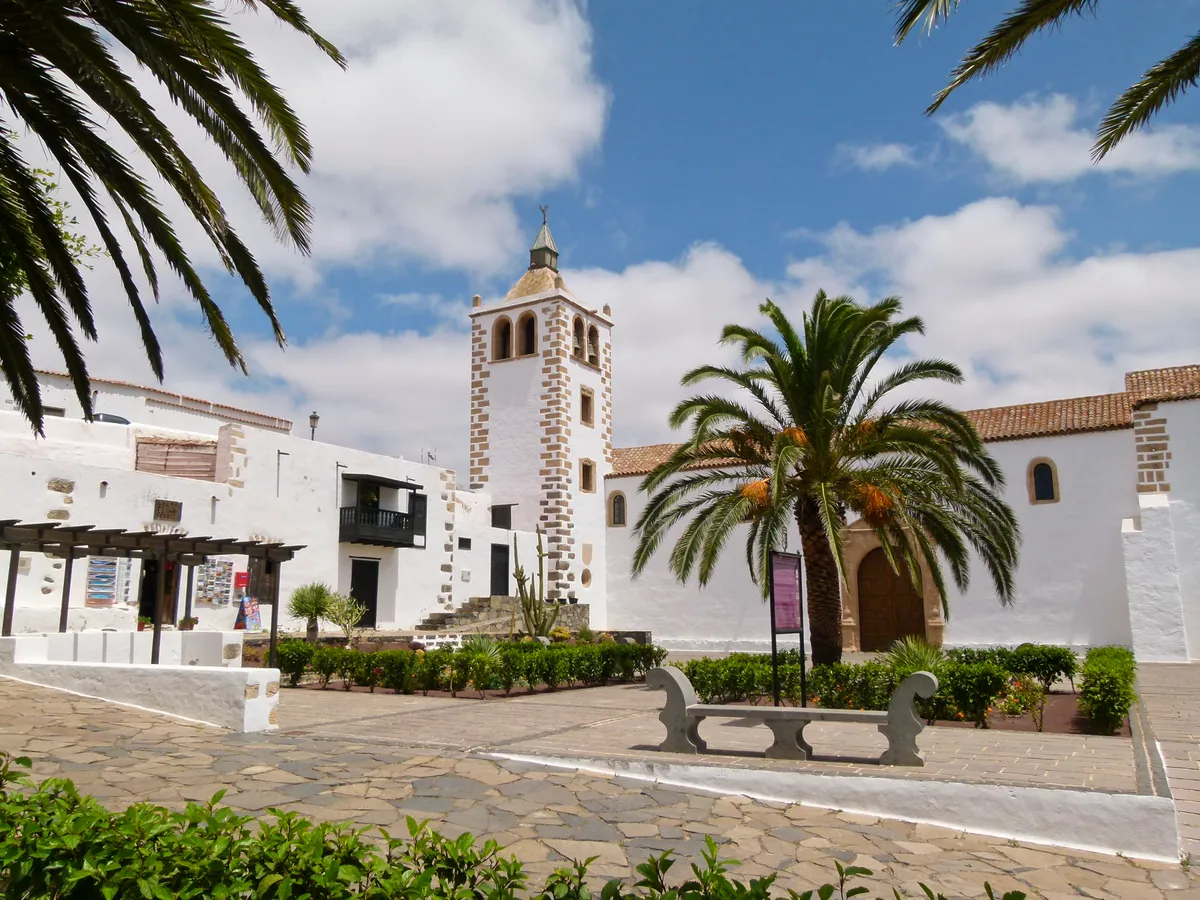
Think of the island in three parts. The north has the resort town of Corralejo, the dunes of Corralejo Dunes Natural Park with the Grandes Playas, and the fishing village of El Cotillo with its La Concha beach and lagoons. The centre holds the capital, Puerto del Rosario, near Fuerteventura Airport (FUE), the old inland capital of Betancuria and the sea caves of Ajuy. The south is the Jandía peninsula, with the lagoon beach of Sotavento on the east side and the remote Playa de Cofete on the west, reached by an unpaved road.
The climate is dry: AEMET's 1981 to 2010 normals for the Fuerteventura airport station give 98 mm of rain a year, an average January high of 20.6C and an August high of 27.8C. Wind is the factor to plan around: great for sailors and surfers, less so for sunbathers on exposed beaches.
What to do
- Walk the dunes and swim at the Grandes Playas de Corralejo.
- Learn to kite or windsurf at Sotavento, or catch the Fuerteventura Kite Festival.
- Climb the crater of Calderón Hondo in the north.
- Visit Betancuria and the coastal caves at Ajuy.
- Try queso majorero, the island's goat's cheese.
- Go surfing on the north coast reefs.
Fuerteventura suits beach lovers, water-sports fans and travellers who want space and quiet over sightseeing. It has less to visit than Lanzarote, its neighbour across a short ferry crossing, and lower hills and less tree cover than Tenerife or Gran Canaria, with long stretches of open beach. Plan with things to do in Fuerteventura and the Fuerteventura 5-day itinerary.
Practical information
Photo gallery
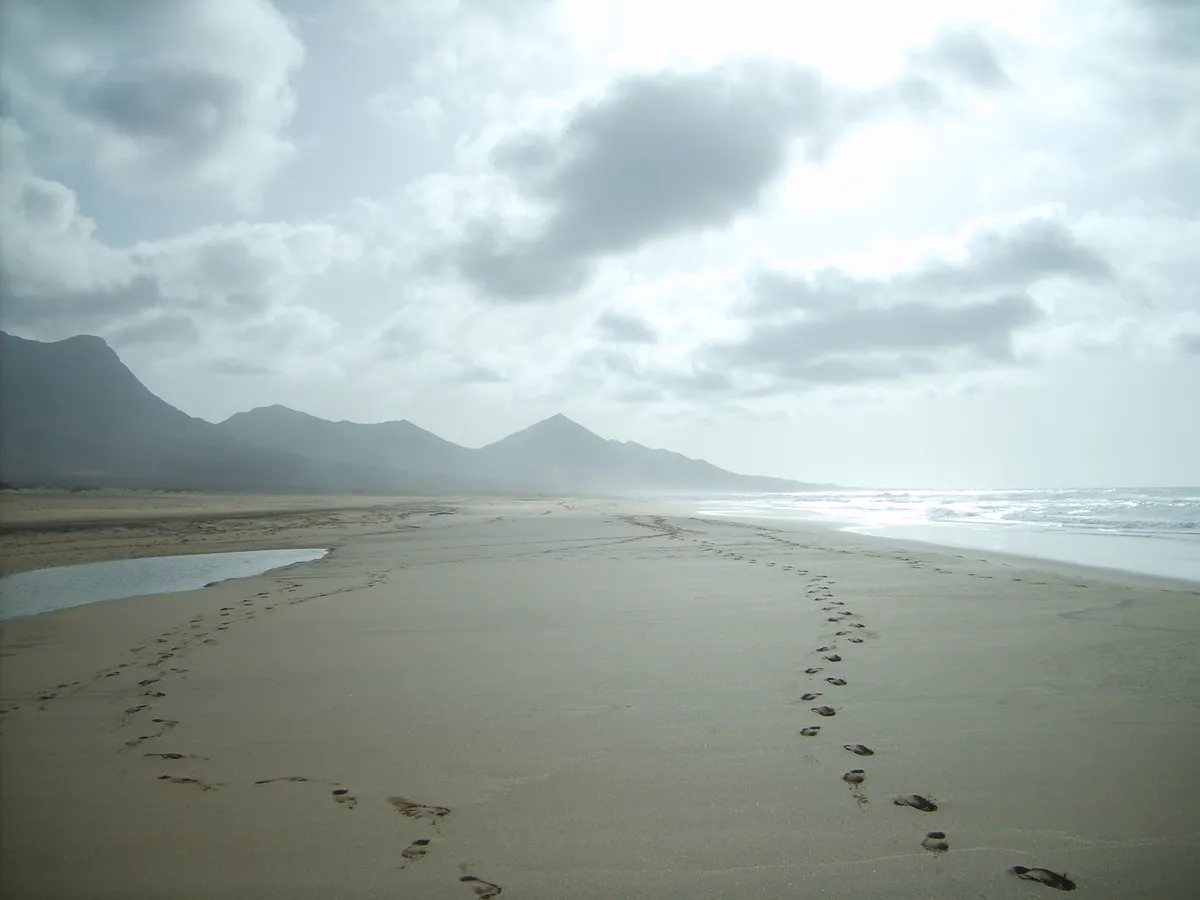
Sand dunes of Corralejo Natural Park with volcanic hills under grey clouds, Fuerteventura
Photo: Thérèse Gaigé via Wikimedia Commons · CC BY-SA 3.0 (https://creativecommons.org/licenses/by-sa/3.0)
Top attractions
Beaches here
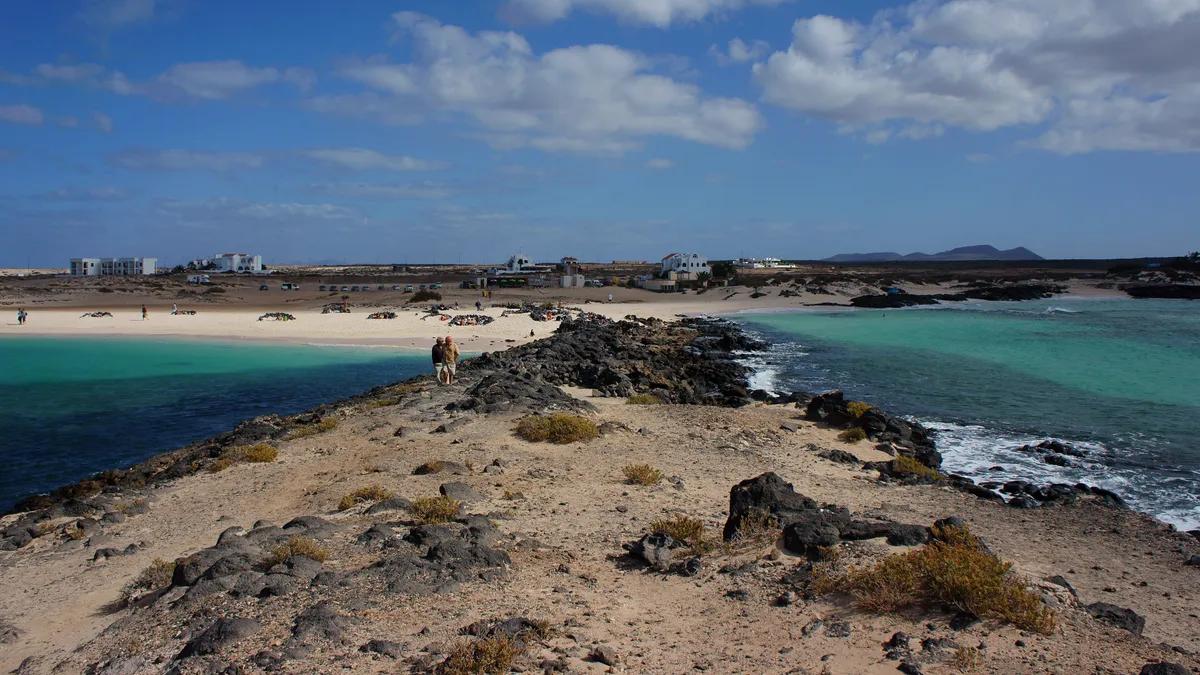
Playa de La Concha and the El Cotillo lagoons
Sheltered white-sand coves north of El Cotillo on Fuerteventura's north-west coast, with gentle waves. La Concha holds a Blue Flag in 2026.
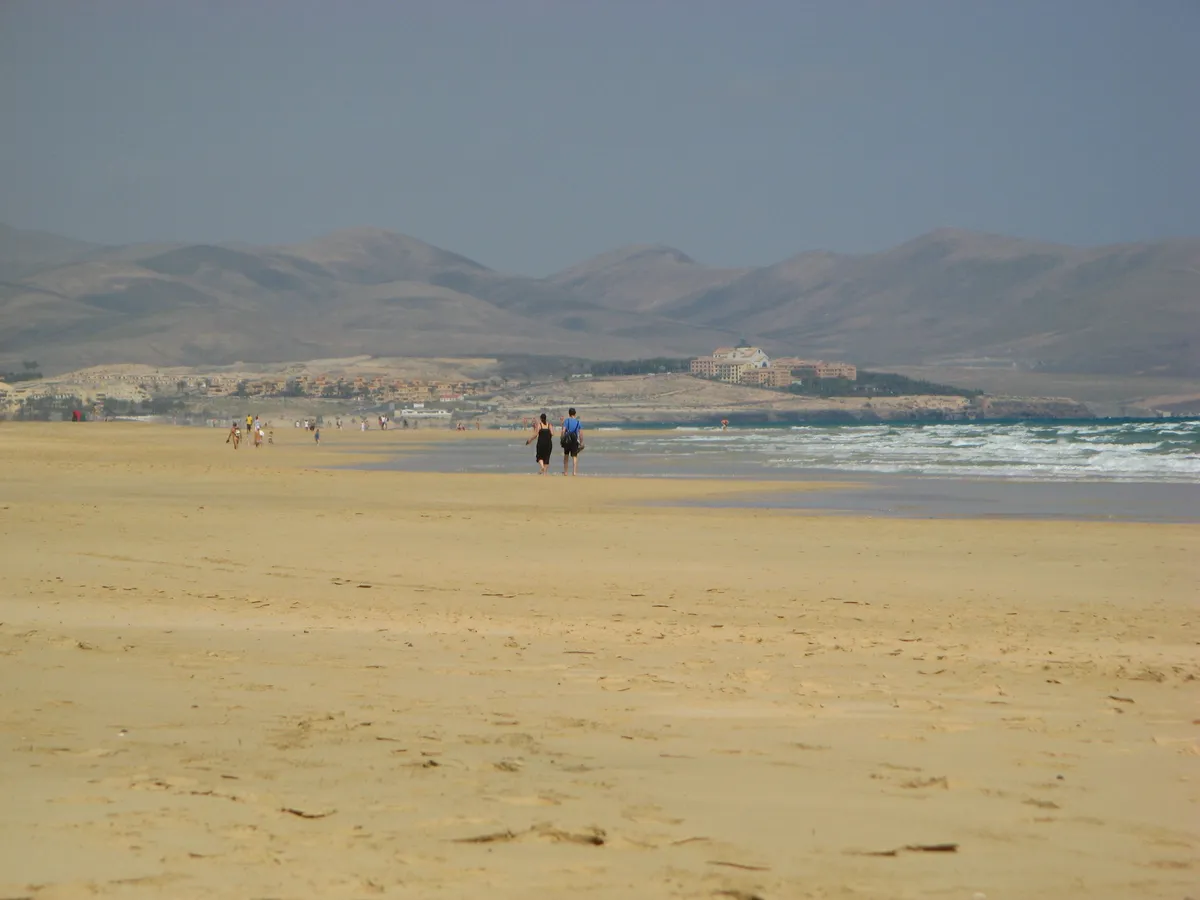
Playa de Sotavento
A 6.5 km sweep of sand on the Jandía coast of south Fuerteventura, with a tidal lagoon and steady wind. Home of the windsurf world championship.
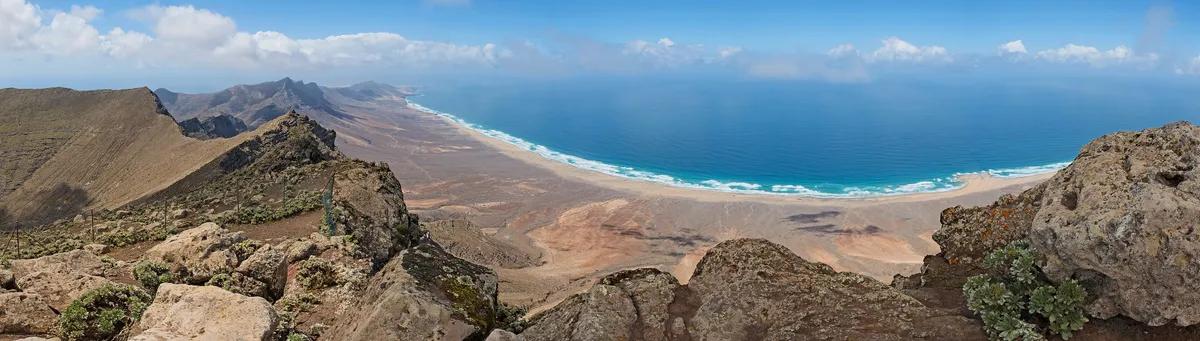
Playa de Cofete
A vast, empty beach on the windward side of the Jandía peninsula in south Fuerteventura, reached by unpaved track. Spectacular, but rough sea and no lifeguard surveillance.
Activities & experiences
Fuerteventura questions
What is Fuerteventura best known for?
+
Long sandy beaches and wind. Fuerteventura has the dunes of Corralejo in the north, the long beaches of the Jandía peninsula in the south, including Sotavento and Cofete, and steady trade winds that make it a centre for windsurfing and kitesurfing.
Where should I stay in Fuerteventura?
+
Corralejo in the north is a lively resort town, near the dunes and the ferry to Lanzarote. Caleta de Fuste on the east coast is close to the airport. Costa Calma and Morro Jable on the Jandía peninsula suit beach holidays in the south. El Cotillo is a quieter village base on the north-west coast.
Is Fuerteventura too windy?
+
It can be windy, especially in summer when the trade winds are strongest. That suits sailors and kiters. For sunbathing, choose a sheltered beach or a resort with a protected bay, and bring a windbreak.
Can you reach Playa de Cofete by car?
+
Cofete, on the west side of the Jandía peninsula, is reached by an unpaved mountain road from Morro Jable. It is a wild beach with strong currents; do not rely on finding lifeguard cover. Treat it as a place to walk and look rather than swim.
What is the weather like in Fuerteventura?
+
Dry and mild. AEMET's 1981 to 2010 normals for the Fuerteventura airport station give an average of 98 mm of rain a year, a January high of 20.6C and an August high of 27.8C.
Keep reading
Travel Guides
Helpful guides for planning your trip to Fuerteventura
 Planning
Best Time to Visit the Canary Islands: Month by Month
The Canary Islands work all year. October to April is the winter-sun season; May, June, September and October suit a mixed trip. Compare stations by coast.
 Beaches Nature
Best Beaches in the Canary Islands: 20 Picks by Island
Twenty Canary Islands beaches on six islands, from Tenerife to La Palma, with honest notes on access, wind and currents and the official 2026 Blue Flag list.
 Areas Islands
Which Canary Island Is Best? All 8 Islands Compared
Compare all eight Canary Islands on beaches, weather and wind, nightlife, families, walking, quiet and flights from the UK and Ireland, then pick by trip type.
 Planning
Canary Islands Public Holidays 2027: Full Calendar
The Canary Islands have 11 archipelago-wide public holidays in 2027, plus one island holiday on each island and two local holidays in each municipality.
 Experiences
Things to Do in Fuerteventura: A Guide by Interest
Things to do in Fuerteventura start with the Corralejo dunes, Isla de Lobos (free permit, capped visits), Cofete's empty beach and the old capital, Betancuria.
 Planning
Canary Islands Island Hopping: Ferries, Flights, Day Trips
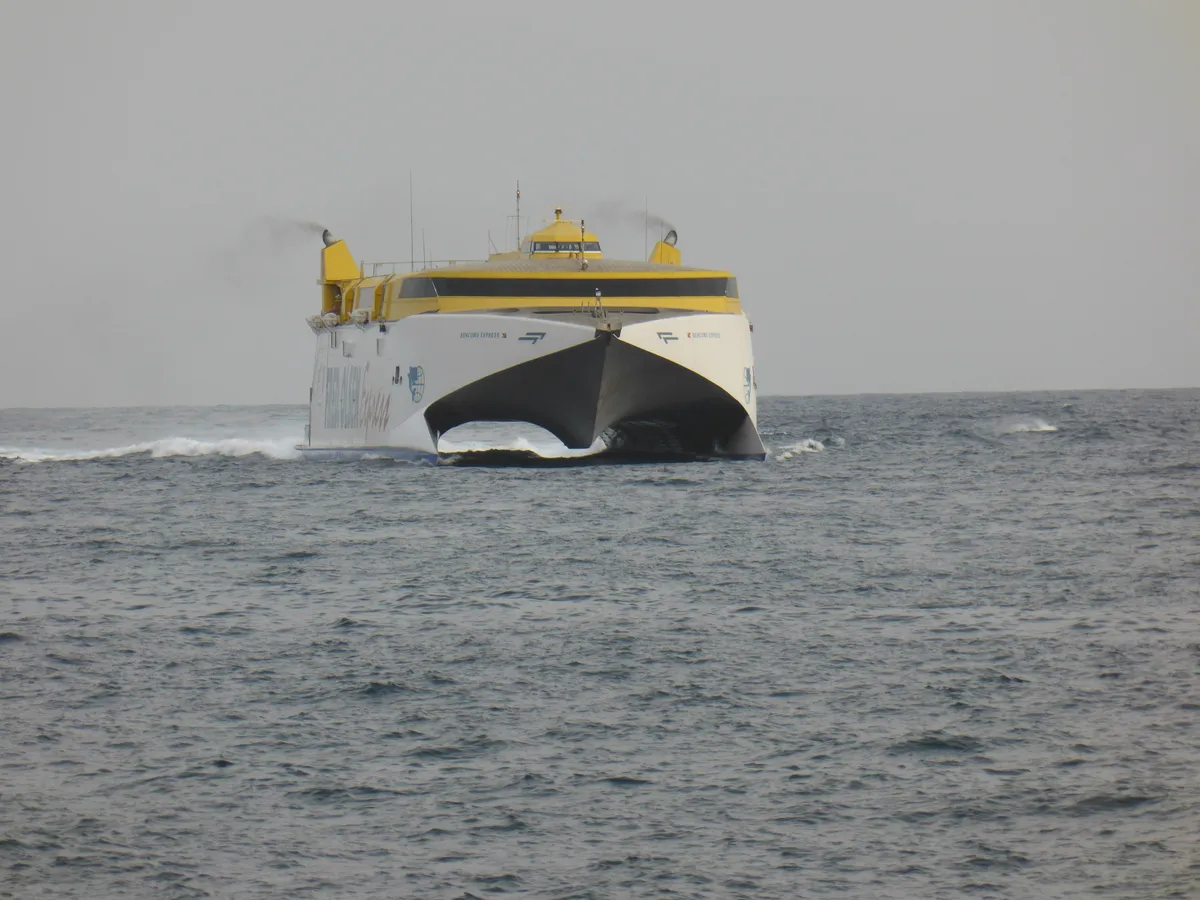
Ferry routes and crossing times between the Canary Islands from the operators' own pages, the best day-trip pairs, hire cars on board and fare discounts.
Keep exploring
Nearby Destinations
Explore more places near Fuerteventura