Things to Do in Fuerteventura: A Guide by Interest
Things to do in Fuerteventura start with the Corralejo dunes, Isla de Lobos (free permit, capped visits), Cofete's empty beach and the old capital, Betancuria.
By Canary Islands 365 Editorial Reviewed by Alex Borshch, Founder & Editor
Published November 16, 2026 · 9 min read
Fuerteventura is the long, dry island in the east of the Canary Islands, in the province of Las Palmas. It is a beach and wind island first: the coast is lined with pale sand, and the steady trade winds draw windsurfers and kitesurfers from all over Europe. Inland, the landscape is bare brown hills, old volcanoes and a handful of quiet villages. UNESCO lists the island as a Biosphere Reserve. Flights arrive at Fuerteventura Airport (FUE) near Puerto del Rosario, in the middle of the east coast; the main bases are Corralejo in the north and the Jandía peninsula in the south. The Fuerteventura island guide covers the basics; this guide is arranged by interest.
Landscapes and parks
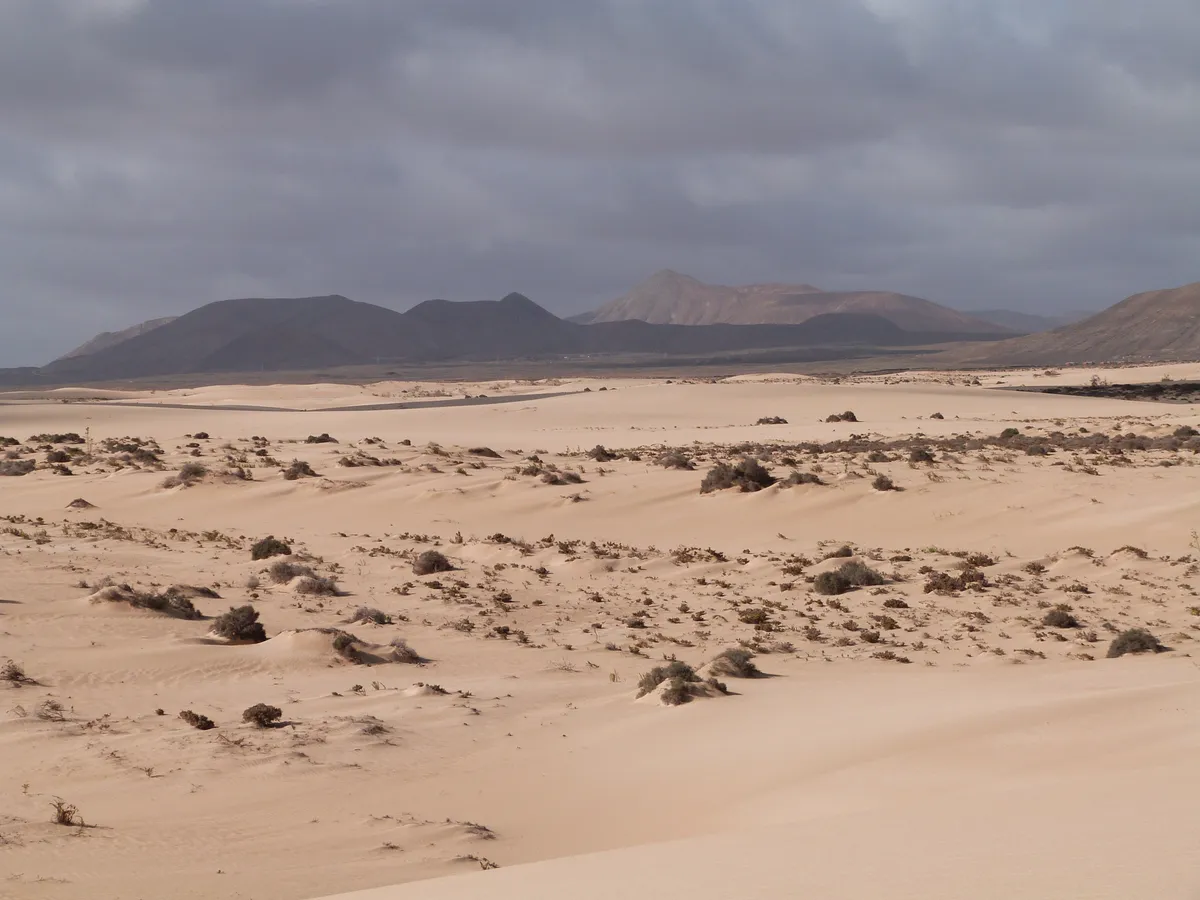
Just south of Corralejo, the Corralejo Dunes Natural Park is a sea of white sand running down to the beaches, with the main road cutting through it. Walk into the dunes for a view away from town. Keep off the vegetation that holds the sand together and take water, as shade is scarce.
A short drive inland, Calderón Hondo is a volcano near Lajares with a well-marked path up to the rim, where you look straight down into a deep, round crater. On the west coast, the Ajuy caves are large sea caves reached on a cliff path from the black-sand beach and fishing village of Ajuy; the layered cliffs are worth a look even if geology is not your thing. Keep well back from the edge in rough seas.
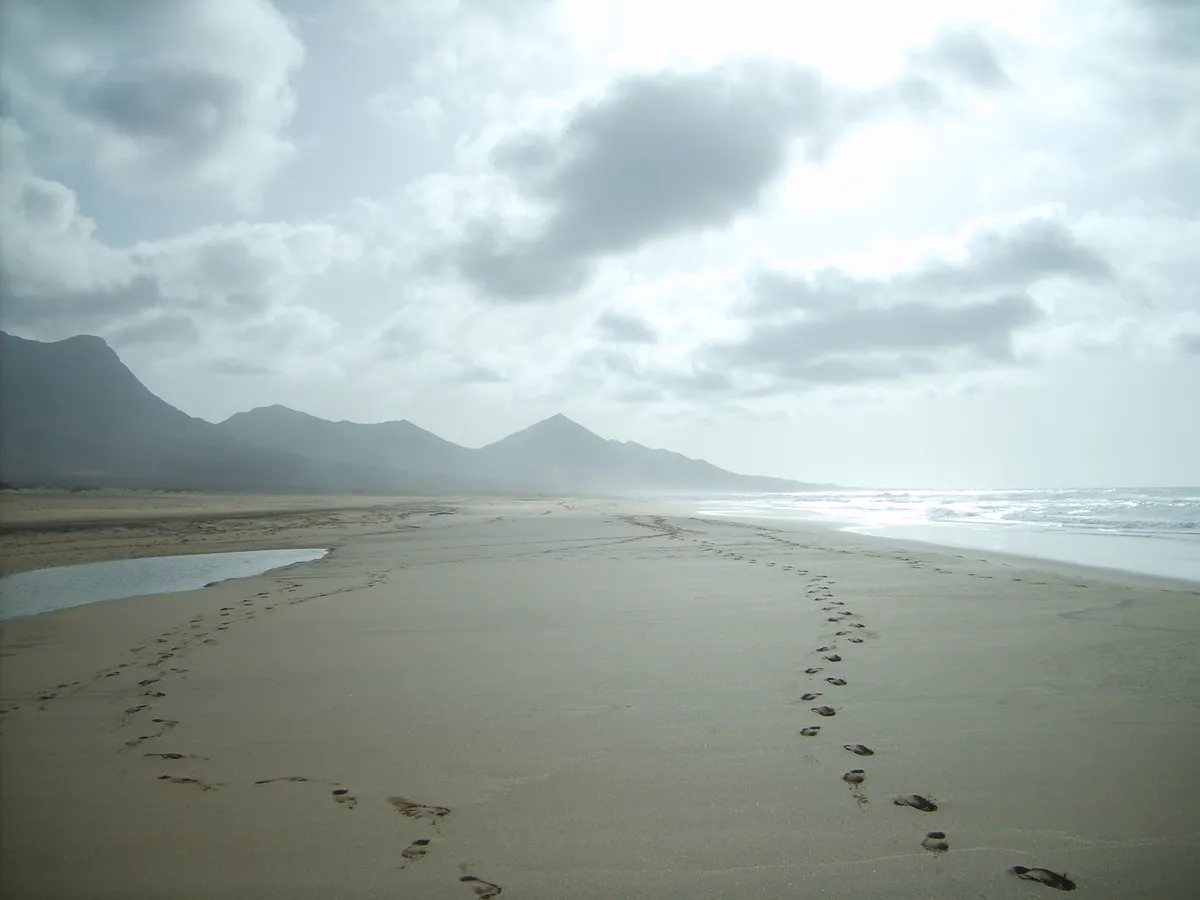
In the far south-west, behind the Jandía mountains, Playa de Cofete is one of the wildest beaches in the Canary Islands: kilometres of sand under a wall of mountains, with almost nothing built on it. You reach it on an unpaved mountain track from the Morro Jable side. Drive slowly, check whether your hire car contract allows unpaved roads, and carry water and food, rather than relying on beach facilities.
Beaches
The Grandes Playas de Corralejo run along the edge of the dunes, wide and pale, with Isla de Lobos and Lanzarote on the horizon. On the south-east coast of Jandía, Playa de Sotavento is a long beach with a tidal lagoon that fills and empties with the tide, famous for kitesurfing and windsurfing. On the north-west coast, El Cotillo has the Playa de La Concha and the El Cotillo lagoons, rock-sheltered pools of turquoise water that are some of the calmest swimming on the island.
Cofete is for looking at, not swimming: the open Atlantic there has strong currents and heavy surf. The best beaches in the Canary Islands guide compares these with the other islands.
Towns and culture
Betancuria, in a valley in the western hills, was founded at the beginning of the 15th century by the Norman Jean de Béthencourt and stayed the island's capital until 1834. Its church of Santa María, whitewashed streets and small museums make a calm half day, and the road there over the mountains has wide viewpoints. Corralejo is a resort town, with a harbour, bars and restaurants; El Cotillo, in the north-west, is a fishing village with a laid-back surf scene.
The island's best-known product is queso majorero, goat's cheese often rubbed with paprika or gofio. Order it with papas arrugadas and mojo picón, and try gofio in one of its many forms.
On the water
Wind is the island's main resource for sport. Sotavento's lagoon in the south and the beaches around Corralejo in the north are the main spots for windsurfing and kitesurfing. The north and west coasts have reef breaks and beach breaks for surfing, from schools for beginners to heavy waves for experts. For calmer water, the El Cotillo lagoons and the sheltered bay on Isla de Lobos suit snorkelling, and dive centres in the north and the south run trips for scuba diving. Once a year, the Fuerteventura kite festival fills the sky over the Corralejo dunes with giant kites.
Isla de Lobos
Isla de Lobos is a small, uninhabited volcanic island off Corralejo, protected as a natural park (Parque Natural Islote de Lobos). Boats from Corralejo harbour make the short crossing. On the island, a marked trail loops round the coast and a path climbs its small volcano for a view back to Fuerteventura and across to Lanzarote.
The rule that matters: you need an authorisation to land, issued free of charge by the Cabildo de Fuerteventura (the island council) through its official LobosPass website, lobospass.com. You choose a date and a visiting shift, and each shift has a capped number of places, shown as availability when you book; in busy periods the shifts fill up. As of November 2026, check whether your boat operator arranges the authorisation or whether you need to request it yourself. The Cabildo permit is free; check what any extra charge covers. Take water, food, sun protection and your own rubbish back with you: there are almost no services on the island.
Walks
Fuerteventura's hiking is about volcanic cones, ridges and coast rather than forest. Calderón Hondo has an accessible walking route; the full circuit around Isla de Lobos is a walk of several kilometres; the hills around Betancuria have longer paths with big views. In the south, the Jandía mountains above Cofete are wild and steep. Start early: there is almost no shade and the wind can be tiring.
With children
The El Cotillo lagoons and the town beaches in Corralejo are the easiest swims for children. Running down the dunes is free entertainment, and a boat trip to Isla de Lobos feels like a proper adventure if you book the authorisation ahead. Avoid Cofete and the exposed west-coast beaches for swimming. The kite festival is a good family day out if your dates match.
A windy or cloudy day
Expect wind: it is what Fuerteventura is famous for. On a day when the beach is too blowy, head inland to Betancuria and its viewpoints, add the Ajuy caves if the sea is calm, and stop for cheese and coffee in a village. On the south of Jandía, the leeward side of the peninsula can be more sheltered than the north. Check Canary Islands weather before choosing a beach.
A day trip by ferry
From Corralejo, ferries cross the strait to Playa Blanca in the south of Lanzarote; Fred. Olsen Express lists the crossing at 25 or 35 minutes depending on the vessel, and Líneas Romero gives about 30 minutes, as of November 2026. A day there could take in the Papagayo beaches or, with a hire car, Timanfaya National Park. From Morro Jable in the south, Fred. Olsen sails to Las Palmas on Gran Canaria in about 2 hours, better for a change of base than a day out. Read island hopping by ferry and plane for the options, and things to do in Lanzarote if the day trip turns into a longer stay. If you are combining two or three islands, the two-week island-hopping itinerary shows how the ferries fit together.
What Fuerteventura is not good for
Fuerteventura is not the island for green landscapes, mountain forests or a dense calendar of museums and architecture; Tenerife, La Palma and La Gomera do those better, and Lanzarote has more to see in a day. It is long and thinly populated, so allow plenty of time for a trip from Corralejo to Cofete. Public transport to remote beaches is limited, but TIADHE lists Line 111 between Morro Jable, Cofete and Punta de Jandía; check the current timetable and return service before setting out. The wind that sailors love can sandblast a beach towel in the afternoon, especially in summer. Nightlife is concentrated in Corralejo. If you are still choosing an island, read which Canary Island is best.
Frequently Asked Questions
Do you need a permit to visit Isla de Lobos?
Yes. To land on Isla de Lobos you need an authorisation from the Cabildo de Fuerteventura, issued free through its LobosPass website for a chosen date and visiting shift, with a limited number of places per shift. Some boat tickets include it and some do not, so check when you book.
How do you get to Playa de Cofete?
By an unpaved mountain track from the Morro Jable side of the Jandía peninsula. Drive slowly, check your car hire terms for unpaved roads, and take water and food, rather than relying on beach facilities. Do not swim there: currents are strong.
Is Fuerteventura too windy for a beach holiday?
Not if you choose your beach. The wind is steady for much of the year, but sheltered spots such as the El Cotillo lagoons and the leeward side of Jandía are calmer, and the wind keeps the heat comfortable. Sailors and kiters come for exactly that wind.
How many days do you need in Fuerteventura?
Five days lets you see the north (dunes, Lobos, El Cotillo), the centre (Betancuria, Ajuy) and the south (Sotavento, Cofete) without rushing. Our Fuerteventura 5-day itinerary shows one route.
Can you visit Lanzarote from Fuerteventura in a day?
Yes. Ferries from Corralejo reach Playa Blanca in Lanzarote in about 25 to 35 minutes, so a day trip to the Papagayo beaches or Timanfaya is easy to fit in.
Pick your threads, perhaps dunes and Lobos in the north or wind and wild beaches in the south, and Fuerteventura gives you space and sand that the busier islands cannot match.
Fuerteventura
This guide covers Fuerteventura. Explore more about this destination.
View Destination
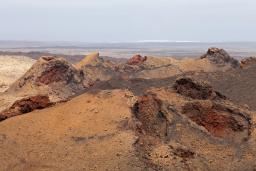
Photo gallery
Wide empty sands of Cofete beach below the Jandía mountains, Fuerteventura
Photo: Xosema via Wikimedia Commons · CC BY-SA 4.0 (https://creativecommons.org/licenses/by-sa/4.0)