Gofio
Toasted grain flour, older than the conquest
Gofio, explained
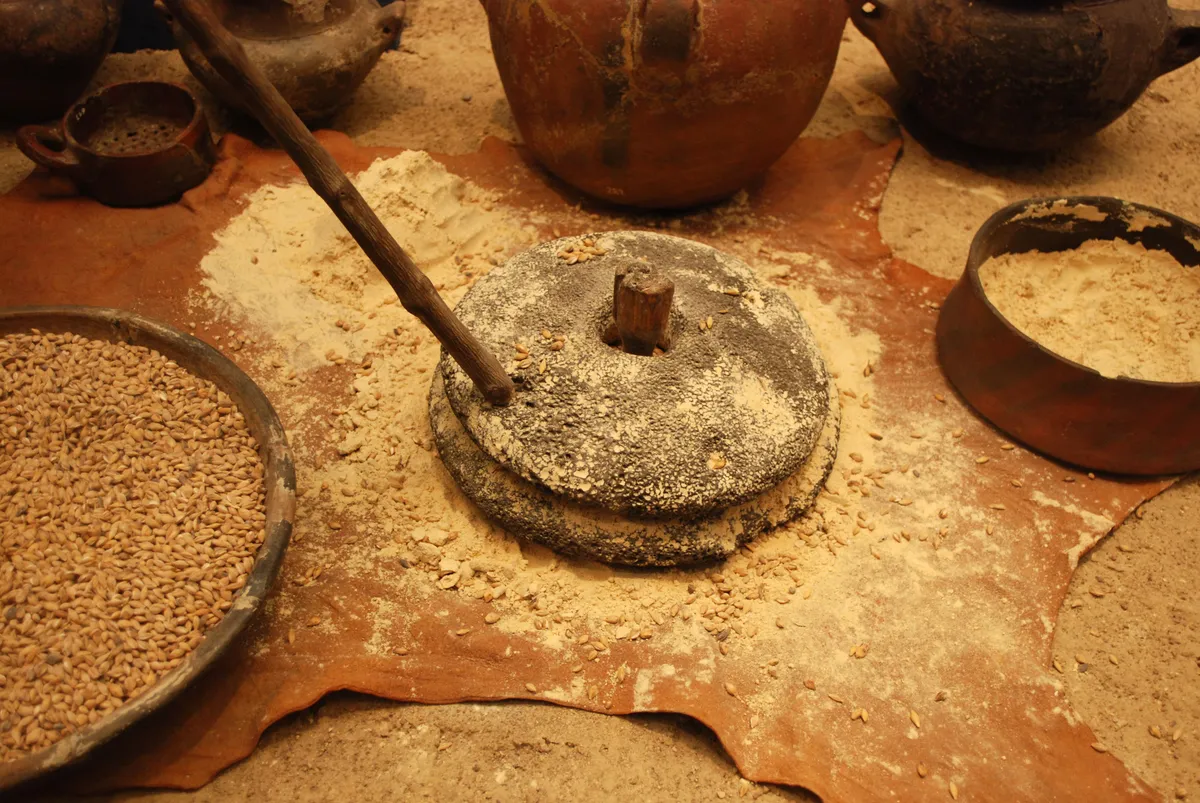
Gofio is flour made from grain that has been toasted before it is milled, so it has a nutty, roasted taste and can be eaten without further cooking. Today it is mostly made from wheat or maize (called millo in the islands), sometimes mixed with other cereals or legumes. Its history runs back to the islands' first inhabitants: Tenerife's island council notes that the Guanches called it ahoren and that the name gofio came into use after the Spanish conquest. It was a staple through hard times and is still part of everyday eating.
You meet gofio in many forms. Stirred into hot fish broth with mint it becomes gofio escaldado (escaldón), a thick savoury porridge. Kneaded with water or broth into a firm dough, it is the pella de gofio that is sliced alongside sancocho. Some people stir it into milk at breakfast or into the broth of a puchero, and it turns up in ice cream, mousse and other desserts. Under the EU name Gofio Canario it is a protected geographical indication (PGI), which covers gofio made in the islands to set rules, including a toasting temperature that may not exceed 200ºC.
Where to try it
- As escaldón or pella de gofio with fish and stews at traditional restaurants in Gran Canaria, Tenerife and La Gomera.
- In gofio desserts and ice cream on restaurant menus across the islands.
- In bags at supermarkets and local mills, labelled by grain and toast level.
Gofio is light, keeps well and is sold in small bags, so it is an easy thing to take home. Look for the Gofio Canario label if you want gofio made in the islands under the protected name.
Key ingredients
Photo gallery
Gofio
Photo: Soront via Wikimedia Commons · CC BY-SA 4.0 (https://creativecommons.org/licenses/by-sa/4.0)
Gofio questions
What is gofio made from?
+
How is gofio eaten?
+
Is gofio a protected product?
+
How old is gofio?
+
Similar dishes
Explore Canarian cuisine
From papas arrugadas and mojo to sancocho and bienmesabe, every island adds something to the table. Browse every dish and find your next favourite.
All Canarian dishes →