Best Time to Visit the Canary Islands: Month by Month
The Canary Islands work all year. October to April is the winter-sun season; May, June, September and October suit a mixed trip. Compare stations by coast.
By Canary Islands 365 Editorial Reviewed by Alex Borshch, Founder & Editor
Published November 16, 2026 · 11 min read
The short answer
There is no bad month to visit the Canary Islands. Average daytime highs at the main coastal airports stay between roughly 20C and 29C across the year, rain is scarce on the coasts, and winter swimming comfort depends on your tolerance for cool water. The real question is what you want from the trip.
- Winter sun (November to March): a season to consider for a break from the UK or Irish winter. At Tenerife Sur airport, November to March average highs range from 21.7 to 24.8C, short days and the year's few rainy spells. See our Canary Islands in winter guide for detail.
- All-round comfort (May, June, September and October): warm, dry, long days, and a sea that is warmest in September and October.
- Peak summer (July and August): the hottest and sunniest months, busy with Spanish and European family holidays.
- Walking: spring and autumn suit the trails of Teide National Park, Garajonay on La Gomera and Caldera de Taburiente on La Palma best.
Where the figures in this guide come from
All air temperatures, rainfall and sunshine figures below are the standard climate values (normales climatológicos) published by AEMET, the Spanish state weather agency, for named stations. AEMET's station pages give these values for the reference period 1981 to 2010, so we use that one period everywhere to keep the islands comparable. They are long-run averages, not a forecast; for the current outlook see our weather page.
The stations are Tenerife Sur airport (64 m above sea level, in Granadilla de Abona), Santa Cruz de Tenerife (36 m, the capital), Tenerife Norte airport (632 m, in San Cristóbal de La Laguna), Gran Canaria airport (24 m, on the east coast in Ingenio), Lanzarote airport (14 m), Fuerteventura airport (25 m) and La Palma airport (33 m, on the east coast). For altitude we use Izaña, an AEMET observatory at 2,369 m in the highlands of Tenerife.
Average daily high by month (C)
| Month | Tenerife Sur airport | Santa Cruz de Tenerife | Tenerife Norte airport (632 m) | Gran Canaria airport | Lanzarote airport | Fuerteventura airport |
|---|---|---|---|---|---|---|
| January | 21.7 | 21.0 | 16.0 | 20.8 | 20.7 | 20.6 |
| February | 22.0 | 21.2 | 16.7 | 21.2 | 21.3 | 21.0 |
| March | 23.1 | 22.1 | 18.2 | 22.3 | 22.9 | 22.2 |
| April | 23.1 | 22.7 | 18.5 | 22.6 | 23.5 | 22.9 |
| May | 23.9 | 24.1 | 20.1 | 23.6 | 24.6 | 24.1 |
| June | 25.4 | 26.2 | 22.2 | 25.3 | 26.3 | 25.8 |
| July | 27.7 | 28.7 | 24.7 | 26.9 | 28.2 | 27.3 |
| August | 28.4 | 29.0 | 25.7 | 27.5 | 29.1 | 27.8 |
| September | 27.9 | 28.1 | 24.9 | 27.2 | 28.6 | 27.5 |
| October | 26.8 | 26.3 | 22.5 | 26.2 | 26.7 | 26.1 |
| November | 24.8 | 24.1 | 19.6 | 24.2 | 24.2 | 24.0 |
| December | 22.8 | 22.1 | 17.1 | 22.2 | 21.8 | 22.0 |
Source: AEMET standard climate values, 1981 to 2010, for each named station. January lows average about 14 to 15C at the coastal airports and about 10C at Tenerife Norte.
North, south and altitude
The single most useful thing to know about Canary weather is that the larger, higher islands have two climates. The northeast trade winds push moist air against the northern slopes of Tenerife, Gran Canaria and La Palma, where it builds a band of cloud on the hillsides. The southern and southwestern coasts sit in the lee of the mountains and stay drier and sunnier.
The AEMET figures show it clearly on Tenerife. Tenerife Sur airport, near the resorts of Costa Adeje, Playa de las Américas and Los Cristianos, averages 132 mm of rain a year over about 15 rainy days and logs 193 hours of sunshine in January. Tenerife Norte airport, up on the plateau near La Laguna, averages 520 mm over about 64 rainy days and 150 hours of January sun, and its winter highs are five or six degrees lower. Part of that gap is altitude (632 m): Santa Cruz, at sea level, is much closer to the south in temperature. Puerto de la Cruz, at sea level on the north coast, is greener and cloudier than the south but warmer than the airport on the plateau above it.
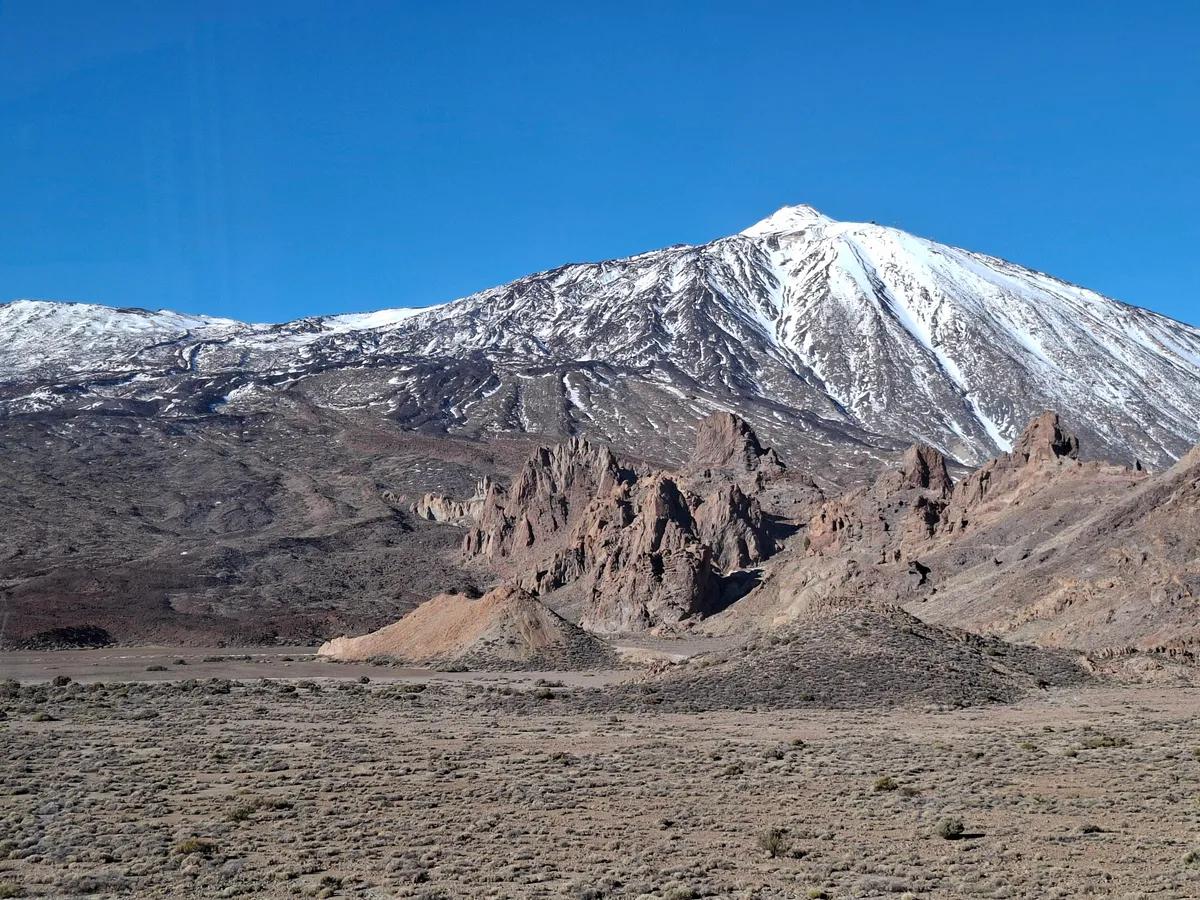
Altitude matters as much as aspect. At Izaña, 2,369 m up, January averages a high of 7.5C and a low of 1.1C, AEMET records an average of about two snow days a month from December to March, and July averages a high of 23.0C. If you plan to ride the Teide cable car, whose upper station is at 3,555 m, or follow our Teide permit and cable car guide, pack a warm layer in any month. The same applies to Roque Nublo in the centre of Gran Canaria and the Roque de los Muchachos on La Palma.
Lanzarote and Fuerteventura are lower and flatter, so they lack the cloud belt and stay dry: Lanzarote airport averages 111 mm of rain a year and Fuerteventura airport 98 mm. They also feel the trade wind more, which is why Corralejo and Playa de Sotavento are known for windsurfing and kitesurfing.
Rain at a glance
| Station | Rain per year | Days with 1 mm or more | Wettest month |
|---|---|---|---|
| Tenerife Sur airport | 132 mm | 15 | December (30 mm) |
| Santa Cruz de Tenerife | 226 mm | 30 | December (43 mm) |
| Tenerife Norte airport (632 m) | 520 mm | 64 | December (82 mm) |
| Gran Canaria airport | 151 mm | 22 | December (31 mm) |
| Lanzarote airport | 111 mm | 19 | December (29 mm) |
| Fuerteventura airport | 98 mm | 16 | December (26 mm) |
| La Palma airport | 369 mm | 40 | December (80 mm) |
Summer is close to rainless: from June to August the coastal stations average 2 mm of rain a month or less, and even Tenerife Norte averages only 5 to 11 mm.
Sea temperature
The Atlantic around the islands is cooler than the latitude suggests. For a consistent long-run figure we use NOAA's OI SST V2 monthly climatology for 1991 to 2020 at the offshore grid point 27.5N 16W, south of the channel between Tenerife and Gran Canaria, matching our weather page. On that basis the sea averages about 20C in January and 19C from February to April, 20C in May, 21 to 22C in June and July, 23C in August, and peaks at about 23C in September and October before easing to 22C in November and 21C in December.
The warmest swimming therefore comes after the warmest air: September and October suit long swims and snorkelling best. It is an open-ocean average for one grid cell, so the water at a given beach on a given day can differ. Look for lifeguarded, reef-sheltered beaches such as Las Canteras in Las Palmas and follow the flags before swimming.
Month by month
January and February
The heart of winter sun. Highs average 21 to 22C in the south of Tenerife and around 21C at the Gran Canaria, Lanzarote and Fuerteventura airports, with lows near 14 to 15C. The north of Tenerife and La Palma see more cloud than the south. Snow is most likely on the Teide heights now. The Three Kings parades on 5 January close the Christmas season, and Carnival begins to dominate from late January.
March and April
Days lengthen and highs edge up to about 22 to 23.5C at the coastal airports, while the sea is at its coolest, about 19C. March still has a few rainy days, April far fewer. This is good walking weather in Anaga, Masca and the western islands. Easter falls on 28 March in 2027, with Maundy Thursday and Good Friday as public holidays (see our 2027 public holidays guide).
May and June
Often overlooked and among the most comfortable months. Highs reach 24 to 26C, rain all but stops, and sunshine hours climb: Lanzarote airport averages 297 hours in May. Trade-wind cloud can sit over the north coasts in early summer. Canary Islands Day on 30 May brings folk music and traditional dress, and the flower and sand carpets of Corpus Christi in La Orotava follow in late May or June, depending on the date of Easter.
July and August
The hottest months, with highs of about 27 to 29C at sea level and July sunshine of around 300 hours at the southern and eastern airports. Spanish and European family holidays peak now. Brief hotter spells can arrive with winds off Africa (see calima, below). High ground is pleasant in the day but still cool at night. Early August brings the Bajada de la Rama in Agaete on Gran Canaria.
September and October
Our pick for an all-round trip: highs still 26 to 29C, the warmest sea of the year at about 23C, and calmer resorts once the school holidays end. Rain starts to return to the north towards the end of October. Good months for diving and for whale and dolphin watching off southwest Tenerife.
November and December
The winter-sun season restarts. November highs average about 24C on the coasts and December about 22C, and December is the wettest month at every station in the table above, though on the southern coasts that still means only a few rainy days. Compare availability before choosing Christmas or New Year dates.
Calima: Saharan dust
Calima is the haze of fine dust that arrives when easterly or southeasterly winds carry air from the Sahara over the islands. During an episode the sky turns milky or orange, visibility drops, and air quality worsens; AEMET described an intense February 2021 episode that left the islands almost hidden under atmospheric dust. Episodes usually last a few days and are not limited to summer: the 2021 episode came in February. People with asthma or heart and lung conditions should follow local health advice and AEMET warnings while one lasts.
Crowds and prices
Compare flight and room prices for your dates, including nearby weeks if your plans are flexible. Check school holidays and the Carnival programme before choosing a city base; do not assume a particular month will be cheaper or quieter.
Carnival season
Carnival is a major event of the Canary year, with celebrations including the Santa Cruz de Tenerife Carnival and the Las Palmas de Gran Canaria Carnival, with smaller carnivals across the islands and Los Indianos in Santa Cruz de La Palma on Carnival Monday. Dates move each year with Easter and with each city council's programme. For 2027, Las Palmas de Gran Canaria has Carnival Tuesday on 9 February as a local holiday, while Santa Cruz de Tenerife has moved its celebrations later than usual: its local holiday for Carnival Tuesday is 23 February 2027, and the council has said the street carnival will run from 19 to 28 February. Check the official programme before booking, and book rooms early for those weeks.
Which month for what
- Warmest sea: September and October.
- Driest weather: June to August at the named stations.
- Winter warmth: the south of Tenerife and Gran Canaria, around Maspalomas, and the low eastern islands such as Lanzarote and Fuerteventura.
- Hiking: March to June and October to November; see hiking in the Canary Islands.
- Choosing an island first? Read which Canary Island is best.
Frequently Asked Questions
What is the best month to visit the Canary Islands?
For a balance of warm air, warm sea, dry weather and fewer crowds, September and October are hard to beat: highs of about 26 to 29C at the coastal airports and the sea at its warmest, about 23C. For winter sun, January to March offers highs of about 21 to 23C on the southern coasts.
Which Canary Island is warmest in winter?
The differences between the coastal airports are small: January highs average 21.7C at Tenerife Sur, 20.8C at Gran Canaria airport, 20.7C at Lanzarote airport and 20.6C at Fuerteventura airport (AEMET, 1981 to 2010). Where you stay on the island matters more: the south of Tenerife and Gran Canaria is sunnier and drier than the north.
When does it rain in the Canary Islands?
Most rain falls from October to March, with December the wettest month at the main stations. Summer is almost completely dry. The north of Tenerife and La Palma get far more rain than the south of Tenerife or the eastern islands.
Is the sea warm enough to swim in winter?
The long-run average sea temperature between Tenerife and Gran Canaria is about 20C in January and 19C from February to April and about 23C in September and October (NOAA OI SST V2, 1991 to 2020).
Is it cold on Mount Teide?
Yes, compared with the coast. AEMET's Izaña observatory, at 2,369 m, averages a January high of 7.5C and a low of 1.1C, with snow on about two days a month from December to March. The cable car's upper station is higher still, at 3,555 m.
When is Carnival in the Canary Islands in 2027?
Each city sets its own dates. In 2027 Las Palmas de Gran Canaria has its Carnival Tuesday holiday on 9 February, and Santa Cruz de Tenerife on 23 February, with street events announced for 19 to 28 February. Check the official programmes nearer the time.
Tenerife
This guide covers Tenerife. Explore more about this destination.
View Destination
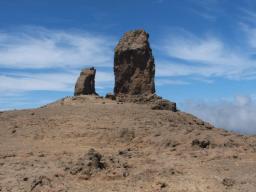
Photo gallery
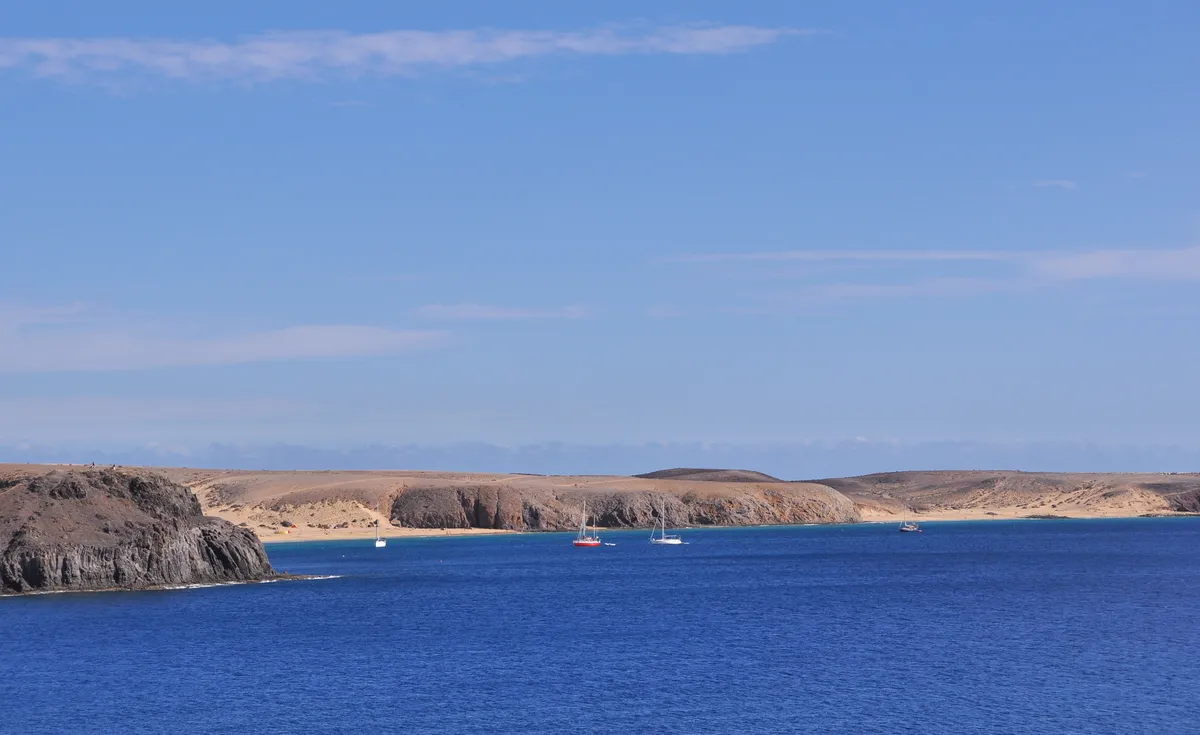
Sailboats anchored off the sandy Papagayo beaches under blue sky, Lanzarote
Photo: Marc Ryckaert (MJJR) via Wikimedia Commons · CC BY 3.0 (https://creativecommons.org/licenses/by/3.0)