Canary Islands in Winter: December to February Guide
From December to February the Canary Islands coastal airports average highs of about 21 to 23C and lows of about 14 to 17C, and the sea sits near 19 to 21C.
By Canary Islands 365 Editorial Reviewed by Alex Borshch, Founder & Editor
Published November 16, 2026 · 10 min read
Is the Canary Islands winter really warm?
Warm by northern European standards, yes; hot, no. Between December and February the coastal airports on the main islands average daytime highs of about 21 to 23C and night-time lows of about 14 to 17C, according to the standard climate values that AEMET, the Spanish state weather agency, publishes for each station (reference period 1981 to 2010). These station averages help visitors from the UK and Ireland plan a winter break. It also means evenings that call for a jumper, a sea that is refreshing rather than balmy, and the occasional grey or wet day.
The rest of this guide covers which island and which coast to choose, the sea, daylight, the mountains, the festive calendar and what to pack. For the whole year, see our best time to visit the Canary Islands guide.
Winter temperatures and rain by island
Average daily high and low for December, January and February at each AEMET station, with the total rainfall for those three months. All figures: AEMET standard climate values, 1981 to 2010.
| Station (altitude) | December high / low | January high / low | February high / low | Rain, Dec to Feb |
|---|---|---|---|---|
| Tenerife Sur airport (64 m) | 22.8 / 16.5C | 21.7 / 15.2C | 22.0 / 15.0C | 67 mm |
| Santa Cruz de Tenerife (36 m) | 22.1 / 16.6C | 21.0 / 15.4C | 21.2 / 15.3C | 110 mm |
| Tenerife Norte airport (632 m) | 17.1 / 11.5C | 16.0 / 10.2C | 16.7 / 10.0C | 232 mm |
| Gran Canaria airport (24 m) | 22.2 / 16.2C | 20.8 / 15.0C | 21.2 / 15.0C | 80 mm |
| Lanzarote airport (14 m) | 21.8 / 15.4C | 20.7 / 14.0C | 21.3 / 14.3C | 63 mm |
| Fuerteventura airport (25 m) | 22.0 / 15.9C | 20.6 / 14.7C | 21.0 / 14.8C | 56 mm |
| La Palma airport (33 m) | 21.8 / 16.7C | 20.6 / 15.5C | 20.7 / 15.3C | 186 mm |
| Izaña, Teide slopes (2,369 m) | 8.8 / 2.4C | 7.5 / 1.1C | 8.0 / 1.3C | 174 mm |
La Gomera and El Hierro have inter-island airports (GMZ and VDE), and we do not quote station figures for those two islands here.
Which coasts are warmest and driest
The table shows that the island you choose matters less than where on it you stay. All the sea-level airports sit within about a degree of one another for daytime highs. The big differences are cloud and rain, and they follow the mountains.
- South and southwest Tenerife. Tenerife Sur airport averages 1.8 days of rain in January and 193 hours of sunshine, among the highest January figures of the coastal stations in the table. This is the coast of Costa Adeje, Playa de las Américas and Los Cristianos, served by Tenerife South airport.
- South Gran Canaria. Maspalomas, Playa del Inglés and Meloneras and Puerto de Mogán sit in the lee of the island's central peaks. AEMET's nearest station in this guide is Gran Canaria airport on the east coast, so treat its figures as a guide rather than an exact match for the resorts.
- Lanzarote and Fuerteventura. The two driest coastal airport references in this table, with 63 mm and 56 mm over the three months at their airports, and Lanzarote airport records 203 hours of January sun. Nights are a little cooler (about 14C in January) and the trade wind is a frequent companion, which suits surfers and kitesurfers more than sunbathers on exposed beaches. Sheltered options include the Papagayo beaches near Playa Blanca and the lagoons at El Cotillo.
- North Tenerife and La Palma. Greener and noticeably wetter. Tenerife Norte airport, at 632 m near La Laguna, gets 232 mm across the winter months and averages only 16 to 17C by day; The Santa Cruz station is much milder than the upland airport. Puerto de la Cruz has a separate coastal setting; do not transfer the airport averages directly to its beaches. La Palma airport averages 186 mm over the three months. These are rewarding winter destinations for walkers and for culture, just not the surest choice for a week on a sun lounger.
Sea temperature in winter
Using NOAA's OI SST V2 monthly climatology for 1991 to 2020 at the offshore grid point 27.5N 16W, south of the channel between Tenerife and Gran Canaria, matching our weather page, the sea averages about 21C in December, 20C in January and 19C in February, its coolest month alongside March. Plenty of visitors swim; many others find it bracing. Check whether your hotel pool is heated, or consider Siam Park on Tenerife as an alternative to the sea. For the most sheltered sea swimming, look at beaches that face away from the swell, such as reef-sheltered Las Canteras in Las Palmas or Playa del Duque on the southwest coast of Tenerife, and always follow the beach flag.
Daylight
The islands lie far south of the UK, so winter days are noticeably longer. Using the US Naval Observatory's sun calculator for Santa Cruz de Tenerife, sunrise on 21 December 2026 is at about 07:53 and sunset at about 18:13 local time, a little over 10 hours 20 minutes of daylight. By 28 February 2027, sunrise is at about 07:31 and sunset at about 19:04, roughly 11 and a half hours. The Canary Islands keep Western European Time, one hour behind mainland Spain and the same as the UK and Ireland in winter, so the sun rises later in the morning than many visitors expect.
Snow on Teide
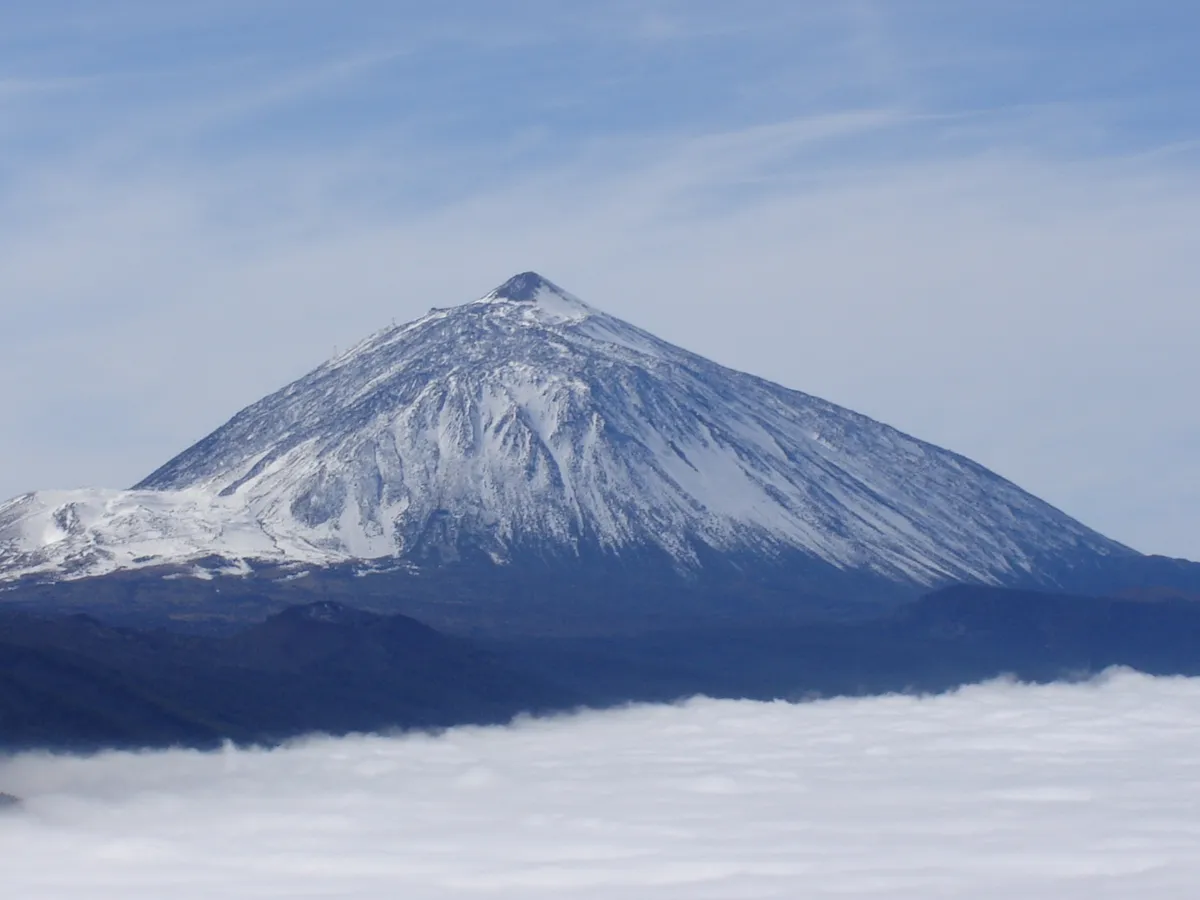
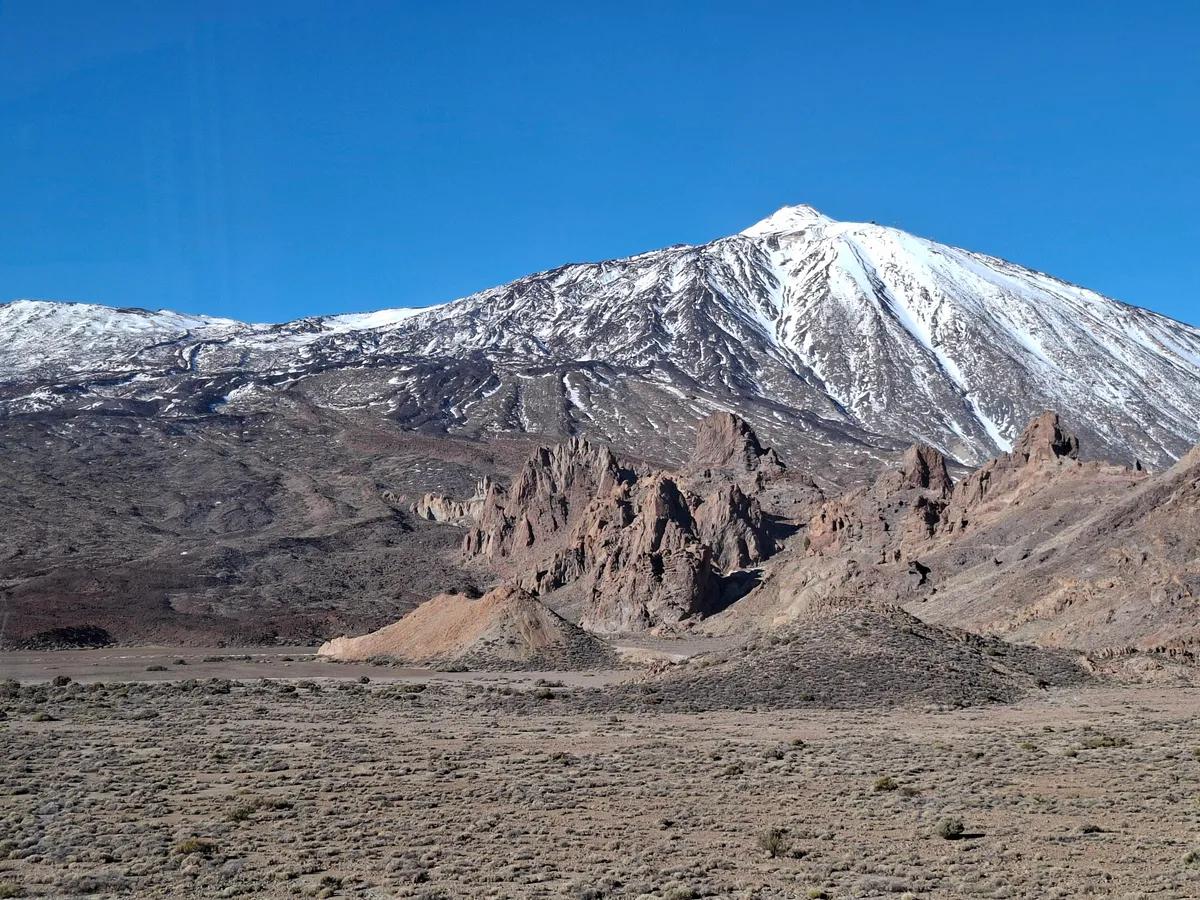
Winter is the season for snow on the high ground of Tenerife. AEMET's Izaña observatory, at 2,369 m in Tenerife’s highlands, averages a January high of 7.5C and a low of 1.1C, with about 1.6 snow days in December, 2.4 in January and 2.5 in February. The summit itself, and the upper station of the Teide cable car at 3,555 m, are colder still. After a snowfall, check road status and the cable car operator's notices before driving up. Wear proper layers, gloves and a hat in Teide National Park, and read our Teide permit and cable car guide if you plan to reach the summit. Clear, cold winter nights are also excellent for stargazing.
Christmas, New Year and Three Kings
Christmas Day (25 December) and New Year's Day are public holidays, and expect quieter streets and more closures on those days in towns away from the resorts. In Spain the main day for children's presents is traditionally 6 January, Epiphany, which is also a public holiday in the Canary Islands. The evening before, 5 January, towns across the islands hold Three Kings parades, when the kings arrive and throw sweets to children. Compare flights and hotel availability early if you plan to travel at Christmas or New Year. Our Canary Islands public holidays 2027 guide lists every date for the coming year, including Tenerife's island holiday on Tuesday 2 February 2027 for the Virgen de la Candelaria.
Carnival
Late January and February belong to Carnival, a major festival across the islands. Two celebrations to consider are the Santa Cruz de Tenerife Carnival and the Las Palmas de Gran Canaria Carnival, with Los Indianos, the white-clothes and talcum-powder party in Santa Cruz de La Palma, on Carnival Monday (see Los Indianos). In 2027 the dates diverge. Las Palmas de Gran Canaria, La Laguna and several other municipalities have Carnival Tuesday on 9 February as a local holiday. Santa Cruz de Tenerife has moved its carnival later than usual: its Carnival Tuesday local holiday is 23 February 2027, and the city council has announced street celebrations from 19 to 28 February. Santa Cruz has published its official programme; check each city’s current programme before booking.
What to pack
- Summer clothes for the day on the southern coasts, plus a warm layer or light jacket for evenings, which drop to about 14 to 17C.
- A waterproof if you will spend time in the north of Tenerife, on La Palma or walking in Anaga or Garajonay.
- Proper winter clothing (hat, gloves, fleece and shell) for Teide, Roque Nublo or any trip above about 2,000 m.
- High-factor sun cream: the winter sun is still strong at this latitude.
- Walking shoes with grip for volcanic trails; see hiking.
What not to expect
- Guaranteed unbroken sun. Winter is when most of the year's rain falls, and a cloudy or wet spell of a day or two can happen anywhere, especially in the north.
- Warm evenings. Dinner outdoors is pleasant in the south, but you will want sleeves.
- A warm sea. About 19 to 21C is swimmable but cool.
- Calm water everywhere. Winter Atlantic swells can make north-facing beaches rough; that is why surfers come.
- Clear skies every day. Episodes of calima, the haze of Saharan dust, can occur in winter: AEMET reported an intense one in February 2021.
- Empty resorts. Compare availability around Christmas, February half-term and the Carnival weekends before choosing your dates.
Choosing your winter base
For the surest sun, stay in the south of Tenerife or Gran Canaria, or on Lanzarote or Fuerteventura and pick a sheltered beach. For walking, try La Gomera or La Palma. For city life, Carnival and a beach in town, choose Las Palmas de Gran Canaria. Still undecided? Compare all eight in which Canary Island is best.
Frequently Asked Questions
How warm are the Canary Islands in December, January and February?
At the coastal airports, AEMET's 1981 to 2010 averages give highs of about 22 to 23C in December and 21 to 22C in January and February, with lows of about 14 to 17C. Higher ground is much cooler: Tenerife Norte airport, at 632 m, averages a January high of 16.0C.
Which Canary Island is warmest in winter?
The sea-level airports on Tenerife, Gran Canaria, Lanzarote and Fuerteventura are within about a degree of each other. Tenerife Sur airport has the highest January average high of those stations, 21.7C. For sun and dry weather, the south of Tenerife and Gran Canaria and the eastern islands are the best bets.
Can you swim in the sea in winter?
Yes, if you do not mind cool water. The long-run sea temperature between Tenerife and Gran Canaria averages about 21C in December and 20C in January and 19C in February (NOAA OI SST V2, 1991 to 2020). Choose sheltered beaches and follow lifeguard flags.
Does it snow in the Canary Islands?
Snow can fall on high ground. AEMET's Izaña observatory on Tenerife, at 2,369 m, averages about two snow days a month from December to February. Use the mountain forecast for high-altitude trips.
How many hours of daylight are there in winter?
About 10 hours 20 minutes at the winter solstice in Santa Cruz de Tenerife, rising to about 11 and a half hours by the end of February, according to US Naval Observatory sun data.
Is January or February better?
The averages are almost identical. February is fractionally warmer by day at most stations. Check the Carnival programme and compare availability after Three Kings on 5 and 6 January.
Is the Canary Islands busy in winter?
Demand depends on your island, dates and local events. Compare availability around Christmas, New Year, school holidays and the published Carnival programmes.
Tenerife
This guide covers Tenerife. Explore more about this destination.
View Destination
Photo gallery
Snow-covered Mount Teide rising above a sea of clouds, Tenerife
Photo: Pepelopex via Wikimedia Commons · CC BY-SA 3.0 (https://creativecommons.org/licenses/by-sa/3.0)